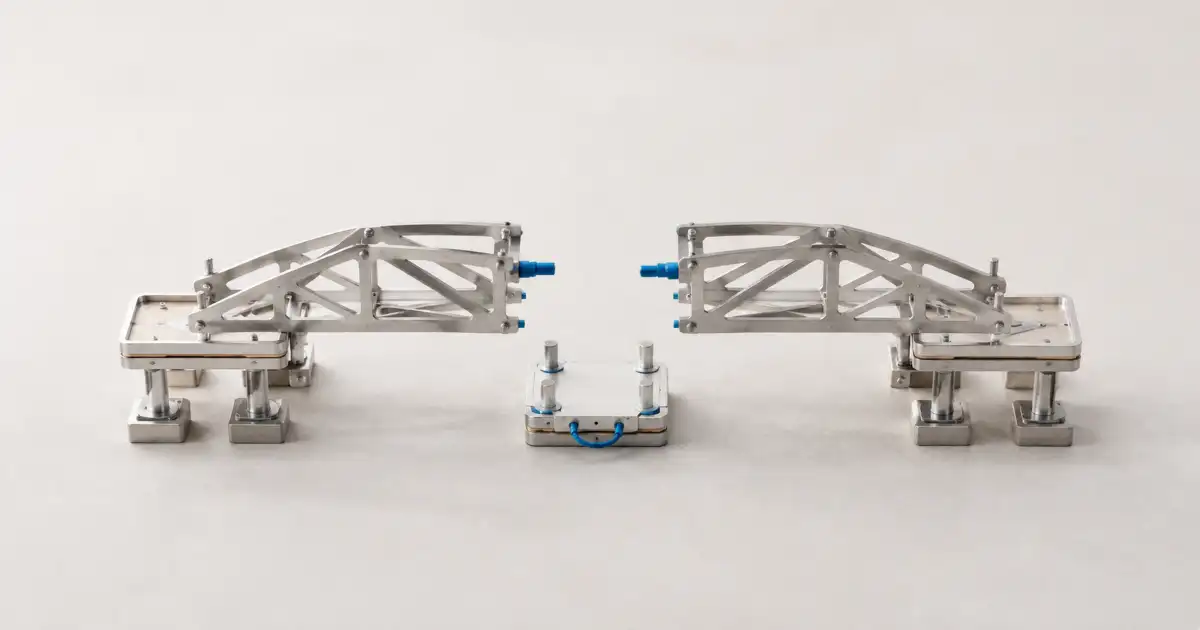
Team capability is not the average of its members
How do two teams with the same average skill level end up responding in completely different ways to a critical incident?
Imagine two shifts responsible for keeping a digital service available. Both bring together similar experience in infrastructure, security, data, and customer service. They also face the same kind of alert. The situation is hypothetical, but the dependencies it exposes are recognizable in many operations.
On the first shift, one person defines the scope. Another gathers technical evidence. The coordination lead determines when to halt an operation and when to notify customers. Each intervention changes the decision that follows.
On the second, the signals emerge but move through separate conversations. Security identifies a risk that infrastructure does not yet know about. Customer service prepares a message before there is a shared diagnosis. No one clearly knows who can suspend the operation.
The two teams’ skill inventories may look almost identical. Their collective response does not.
The unit of analysis changes with the work
An individual average summarizes people’s attributes. It can help describe the experience available or compare results under a known rule. Its usefulness ends when we try to infer how a group will act on an interdependent task.
During an incident, the result does not come from isolated contributions that are later added together. It depends on the order in which they arrive, the information people share, and the decisions each person can make. A correct observation communicated too late loses some of its value. Expert advice without the authority to act may go nowhere.
This difference also explains why raising the average does not guarantee a stronger response. Adding another experienced person may increase the knowledge available while leaving intact the dependency that blocks coordination.
Collective capability emerges from the way work is configured: complementarity, coverage, sequence, authority, and the ability to recover.
Individual excellence can conceal fragility
On the second shift, only one person knows how to interpret certain critical logs. While that person is available, they resolve issues quickly and protect the team. When another priority demands their attention, everyone else repeats checks and prepares decisions that later need to be corrected.
No skill disappeared from the inventory. What changed was the effective availability of an essential contribution.
Concentration can call for different responses. If expertise is missing, it should be developed or brought in. If the difficulty stems from exclusive authority, training more people will not resolve the blockage on its own. Authority may also need to be distributed, procedures shared, or the on-call arrangement redesigned.
What happens between people also produces performance
Woolley and colleagues studied group performance across a range of tasks. They found a collective performance factor associated with properties of the interaction, including how conversational turns were distributed and social sensitivity. Neither the average nor the maximum individual intelligence explained the result on its own. Woolley and colleagues, Science, 2010 (opens in a new tab).
The study was experimental and does not offer a ready-made scale for evaluating every team. Its contribution here is more precise: there are good reasons to examine how people function together in addition to their individual attributes.
On the first shift, the security warning arrives before the response is compromised. On the second, it remains trapped in a parallel conversation. The difference is not who knows more, but whether the knowledge reaches the place where it can change a decision.

This reading complements the argument in Organizational dark matter. There, the problem was a model that omitted contributions and dependencies. Here, the question centers on the configuration that makes it possible to sustain a collective response.
Observing capability requires representative work
An assessment based only on profiles does not show what happens when an absence, an exception, and an urgent decision coincide. To understand team capability, we need to follow a real situation or a sufficiently representative simulation.
The path should make it possible to reconstruct who receives the signal, who interprets its importance, and what information each decision requires. It should also show what happens when two demands compete for the same person or when a contribution arrives too late.
That analysis may reveal a demonstrated shortfall. It may also show a lack of evidence, poorly distributed authority, or a dependency with no recovery path. Blending those conclusions into an average makes the subsequent decision less precise.
The average remains useful for the question it actually answers. What it cannot represent is how capabilities combine under pressure.
Two teams may bring together similar talent and sustain different outcomes. Collective performance is defined by everything that allows an individual contribution to reach the group’s decision in time and with an effect.
To extend this reading, see The Skills-Powered Organization and the shift toward capabilities and Unreasonable Hospitality and the ability to exceed expectations, which develop complementary dimensions of the problem.
Keep exploring

Leadership is not always management: how to represent cross-functional contribution
Some people change decisions, raise standards, and expand others' capability without managing a team. The architecture needs to represent that contribution without inventing informal authority.

Generalists, specialists, and hybrid roles: what the architecture should decide
Does the organization need breadth, depth, or integration? Generalist, specialist, and hybrid are possible answers, not identities the architecture should fix permanently.

When an expert should stop solving and start multiplying capability
Before asking an expert for more solutions, consider whether their next contribution should increase the system's autonomy. Multiplying capability changes the object of their work.

Not every critical skill is strategic: importance, scarcity, and advantage are not the same
Although importance, scarcity, and advantage are often compressed into the label “critical skill,” each dimension requires different evidence and investment. Separating them changes what must be protected, sourced, or built as a system.

Build, hire, move, partner, or automate: five responses to a capability gap
To choose among building, hiring, moving, partnering, or automating, compare the demand, the time horizon, and the dependencies each response creates.
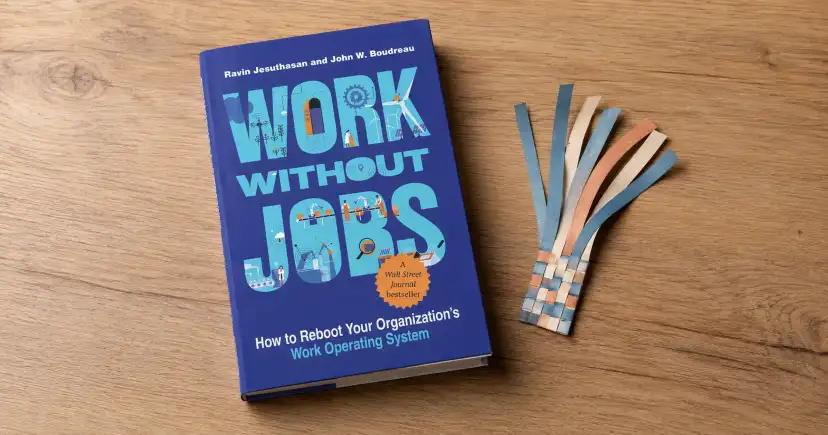
Work without Jobs and the missing link between skills and work
Work without Jobs proposes looking beyond the job as a whole and brings into view a layer that skill architectures often overlook: the work that needs to be organized.