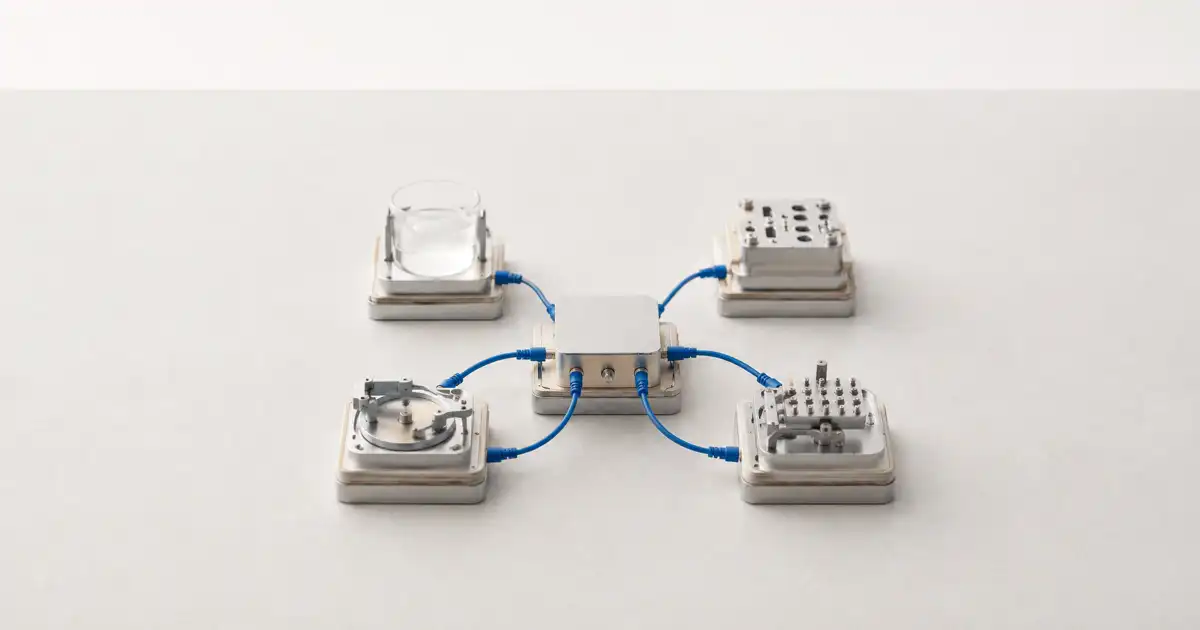
When an expert should stop solving and start multiplying capability
Before asking an expert for more solutions, consider whether their next contribution should increase the system's autonomy. Multiplying capability changes the object of their work.
Observe what happens when the expert is absent
Workload can mislead. A very busy specialist may be expanding capability if they spend time reviewing decisions, building methods, and supporting practice. Another may resolve only a few exceptions that keep the entire system waiting for their judgment.
Absence reveals the architecture. If work stops, decisions are postponed, or the standard falls without one specific person, capability is concentrated. The diagnosis must identify what depends on that person: knowledge, authority, relationships, access, or confidence to assume consequences.
Multiplication begins when the expert stops being the default route for situations that others could learn to resolve.
Immediate results compete with learning
Solving a problem personally is usually faster today. Explaining the reasoning, observing a first attempt, and allowing for corrections takes time. Operational pressure rewards the immediate answer and postpones the development of autonomy.
That tradeoff changes when repeated. Every solution delivered without team participation closes the case while preserving the next question. Local efficiency accumulates a debt: the expert receives more interruptions, everyone else practices less, and the organization loses response options.
This does not mean withdrawing help. It means deciding which cases should become productive practice and which should retain specialist review.
Make shareable judgment visible
Ikujiro Nonaka described organizational knowledge creation as a continuous interaction between tacit and explicit knowledge. Applying that idea here has a clear limit: documenting a practice cannot capture all expert judgment. It can, however, help separate rules, signals, exceptions, and reasoning that other people can test. Nonaka, 1994 (opens in a new tab).
A useful explanation shows which information changes the decision, which error is tolerable, and when to escalate. The expert can select cases, think aloud, compare alternatives, and review samples. The procedure preserves what is repeatable; supported practice develops interpretation.
Transfer decisions through thresholds
Autonomy does not have to appear all at once. It can grow by type of case, consequence, reversibility, or novelty.
First, another person observes and reconstructs the reasoning. Next, they propose a decision before learning the expert’s answer. Later, they execute within defined boundaries and request review for exceptional situations. The final stage does not eliminate the specialist: it reserves their attention for work that still requires singular depth. Depth is reserved best when demand makes explicit where it needs specialization, breadth, or integration, rather than treating those profiles as permanent identities.
Errors need explicit treatment. Amy Edmondson’s research linked psychological safety with learning behaviors in teams. It does not prove a method for transferring expertise, but it supports a relevant condition: asking questions, admitting uncertainty, and discussing mistakes requires an environment where these actions are not automatically punished. Edmondson, 1999 (opens in a new tab).
Design a portfolio of cases for learning
Transfer rarely occurs through random exposure. If people receive only simple tasks, they learn the procedure but not the signals that announce an exception. If they begin with the most costly cases, one error can close the space for practice.
Order situations by novelty, reversibility, and consequence. Combine frequent cases with some that require comparing alternatives. Before acting, ask the person to state what they observed, which hypotheses they discarded, and which condition would make them escalate. Afterward, compare the reasoning, not only the outcome.
Also set aside calibration time among several people. When everyone depends on private correction from the expert, autonomy remains organized around that individual. Comparing decisions and agreeing on criteria turns individual experience into a collective reference that can continue to evolve.
Measure independence, quality, and recovery
Counting sessions, manuals, or people trained describes activity. Distributed capability appears when several people recognize a situation, explain their decision, and maintain the standard without relying on the same intervention.
Observe response time during the expert’s absence, decision quality within the thresholds, and the ability to recover from an exception. Also review whether the specialist receives more complex problems or simply keeps the same work alongside the obligation to teach.
Look for distribution, not individual replacement. If a second person absorbs every question, the risk has merely changed names. The strongest signal appears when different team members resolve families of cases, explain compatible criteria, and know how to come together around a new exception. The backup network matters as much as the number of capable people.

Incentives matter. If the organization rewards individual volume and operational heroics, multiplication will look like lost productivity. The contribution should recognize reduced dependency, the quality of shared judgment, and the growth of independent responses.
The transition also needs protected capacity. Asking the specialist to maintain their full output while training others turns learning into after-hours work. For an explicit period, part of the workload should shift toward selecting cases, observing, and designing thresholds. That investment can be measured against interruptions avoided and response time recovered.
The shift occurs before the expert is no longer needed. It occurs when their direct intervention resolves less than the decision system they could help build. If the next solution preserves the dependency, where should their expert judgment be invested now?
To extend this reading, see The organization can have the right skills and the wrong operating model, which develops a complementary dimension of the problem.
Multiplying capability also requires recognizing when an expert’s influence crosses functions without becoming a parallel management track. That scope needs an explicit mandate, boundaries, and recognition.
Keep exploring

Leadership is not always management: how to represent cross-functional contribution
Some people change decisions, raise standards, and expand others' capability without managing a team. The architecture needs to represent that contribution without inventing informal authority.

Generalists, specialists, and hybrid roles: what the architecture should decide
Does the organization need breadth, depth, or integration? Generalist, specialist, and hybrid are possible answers, not identities the architecture should fix permanently.

Not every critical skill is strategic: importance, scarcity, and advantage are not the same
Although importance, scarcity, and advantage are often compressed into the label “critical skill,” each dimension requires different evidence and investment. Separating them changes what must be protected, sourced, or built as a system.

Build, hire, move, partner, or automate: five responses to a capability gap
To choose among building, hiring, moving, partnering, or automating, compare the demand, the time horizon, and the dependencies each response creates.

Why leaders hold on to talent the organization needs to move
Why would a leader hold on to someone who could contribute more in another unit?
Work without Jobs and the missing link between skills and work
Work without Jobs proposes looking beyond the job as a whole and brings into view a layer that skill architectures often overlook: the work that needs to be organized.