About
We seek to understand before we intervene.
Organizations need to represent a complex reality in order to recognize patterns, but every representation leaves some context out. Our responsibility is to create clarity without presenting one part as if it fully described a person or a system.
The question behind our work
Measuring one part is not the same as understanding the capabilities that sustain an outcome.
Organizations draw on indicators, assessments, conversations, and knowledge distributed across the business. Each source reveals something; none captures the entire system it seeks to describe. When those signals are combined too soon, a difference can look like a gap, and missing evidence can be mistaken for missing capability.
PRYSMAP is designed to strike that balance: it structures perceptions, examines them against clear expectations, and preserves the context needed to understand what the evidence can—and cannot—support, without treating a partial representation as objective truth.
We are not trying to remove human judgment. We want to give it a foundation that can be explained, discussed, and revised.
A discipline
Reduce uncertainty without hiding what we still do not know
Clarity does not require pretending that every question has been answered. It requires distinguishing what the evidence supports, what still needs to be observed, and who remains accountable for the decision.

Our direction
Purpose, vision, and mission.
Purpose
Reveal capacity
Reveal the capacity of people and organizations to sustain better decisions over time.
This is what we seek to make visible: not an isolated snapshot, but the capacity to sustain decisions and learn from their effects.
Vision
Understand interactions
Understand the human interactions that shape the future.
This broadens the view: capabilities do not exist apart from the relationships and conditions in which they do—or do not—become visible.
Mission
Structure clarity
Turn perceptions, signals, and dispersed knowledge into a structured interpretation that clarifies capabilities and supports well-founded action.
This defines the work: create structure without erasing origin, interpret within explicit limits, and connect each interpretation to action that can be reviewed.
What we believe
Five principles guide what we build.
People are not resources
People contribute time, knowledge, and capabilities, but what an organization can observe or use never captures the whole person. No result should become a measure of anyone’s value.
Perception contains information, not certainty
One perspective may reveal something another vantage point cannot. Its interpretation must preserve the relationship from which it arises, its context, and the possibility of error. When evidence falls short, withholding a conclusion must remain a valid outcome.
Measurement builds a representation
Every number depends on decisions about what to observe, how to classify it, and what meaning to assign. The expectation and intended use must be defined before the result is observed; precision alone does not broaden the scope of a conclusion.
An organization is understood through its relationships
Behavior interacts with expectations, authority, information, resources, and incentives. Focusing only on the person may leave system conditions that also contribute to the problem unchanged.
Every interpretation must remain open to revision
Action produces consequences and new evidence. Learning requires recognizing when an interpretation was incomplete and correcting it without defending the appearance of certainty. People remain accountable for the decision and its consequences.
Founders
Two complementary perspectives, one shared responsibility.
We bring together two perspectives on the same problem: how to turn dispersed signals into understanding that supports decisions without flattening human complexity.
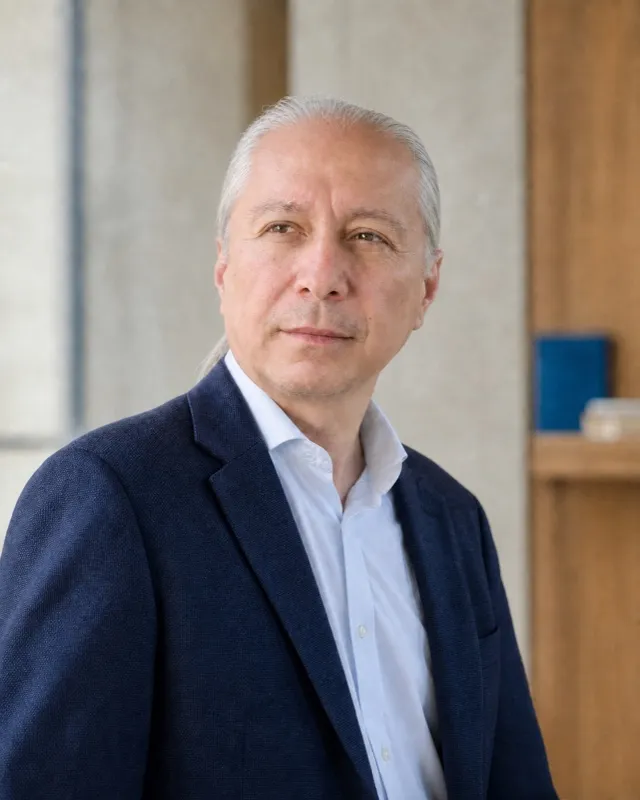
Luis Parra
Strategy and leadership
Luis works at the intersection of strategy, capabilities, and organizational decision-making. He is particularly interested in turning scattered evidence into better questions without losing sight of the limits of what has been observed—or who remains accountable for the decision.
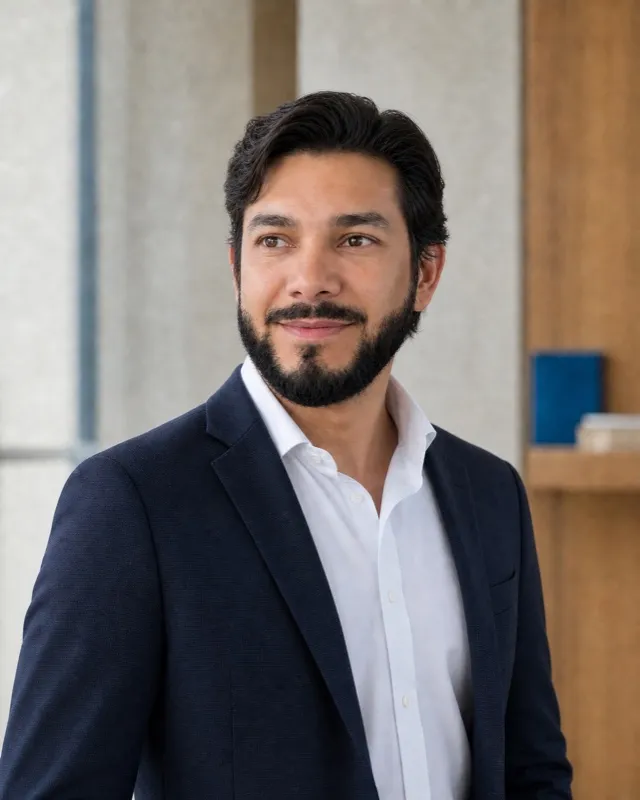
Alejandro Mayorga
Operations and technology
Alejandro focuses on how technology and processes can support the real complexity of an organization. He combines architecture, product, and operations to turn changing needs into systems that are understandable, maintainable, and able to grow deliberately.
Ideas that shape our view
Questions and perspectives that shape who we are.
This selection of articles brings forward the questions, principles, and tensions that shape what we build. It is not a fixed manifesto; it reflects thinking that continues to evolve with our work.




Explore the platform
Create an account and frame your first question.
Start with a decision, an expectation, and a limit your organization can explain.
Create an accountOpens the PRYSMAP platform in a new tab