Succession without a bench: how to measure depth and coverage
A matrix showing two successors for every position can still hide severe dependency; coverage, depth, and time reveal how resilient the network really is.
Seven critical positions appear covered. Look at the names, however, and the same person is listed as the alternative for five of them—and depends on the expert who holds another.
The table contains candidates. The system does not contain five independent responses.
Coverage locates exposure
First define what needs continuity: a position, a decision, a relationship, or a capability whose absence would produce a material consequence.
Then classify the available response. There may be immediate coverage, a supported transition, a development horizon, or insufficient evidence.
Counting someone as available when they need a year, cannot be released, or have never faced the relevant complexity distorts the current situation. Coverage must retain both time and conditions.
CIPD describes succession as preparing to fill key positions when someone leaves or changes roles. That definition places continuity and development within the process, but it does not turn a list of names into evidence of readiness. CIPD, Succession planning, 2025 (opens in a new tab).
Depth measures independence
Two alternatives add depth when they can respond without depending on the same bottleneck.
Review who trained them, where they work, which authority they share, and what other function they sustain. Two people from the same project may both become unavailable during a reorganization. Two candidates who require approval from the same expert preserve the central dependency.
Depth does not require identical copies either. It can combine one ready person, another who needs brief adaptation, and a temporary external response. What matters is knowing which scenario each one covers and which gap is created by moving them.
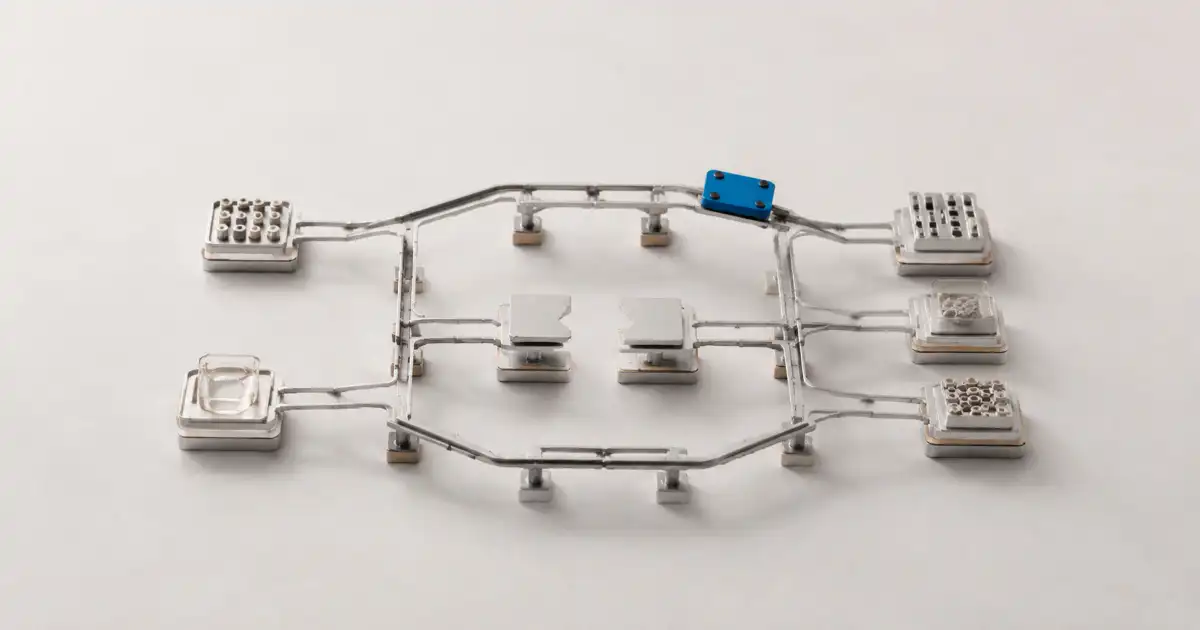
A dependency network is a useful representation. Connect every critical demand to the people, teams, or partners that could sustain it; mark shared resources and availability conditions. The network reveals nodes that a position-by-position table obscures: the same authority, a single platform, or tacit knowledge on which several alternatives depend.
Readiness must be described with evidence
“Ready now” needs conditions: demonstrated decisions, complexity, autonomy, context, and limits.
A strong reputation provides a hypothesis. A standalone score summarizes evidence under certain rules. Neither proves on its own that the person can take on the full critical demand.
Readiness has a date and requires asking how long its evidence remains current. Older evidence remains relevant if the demand is stable and the person keeps practicing; it weakens when technology, regulation, or scale changes. Recording when and where it was demonstrated prevents “ready now” from surviving several cycles without being examined again.
The evidence may show transferable capability alongside adaptation still needed. That combination does not mean the person is unprepared; it requires a transition designed for the risk.

The GAO proposes assessing how training and development initiatives connect to organizational performance and capabilities. Its guidance applies to the US federal government, but it reinforces a relevant discipline: do not confuse development activity with demonstrated capability. U.S. GAO, 2004 (opens in a new tab).
Scenarios reveal hidden concentrations
Test an unexpected departure, two simultaneous vacancies, rapid growth, and a change in strategy.
One person may cover a position during stable operations and cease to be an option when two demands arise. Someone else may be available, but moving them empties an equally critical function.
The scenario forces a view of the whole network. The sum of individual coverage does not represent the outcome when several boxes compete for the same person, authority, or knowledge.
The dashboard must show its assumptions
Avoid a single percentage that mixes positions with different impacts. Show concentration, time to availability, transition conditions, and the scenario used.
The organization needs to distinguish accepted exposure from exposure that requires action. Responses may include gradual experience, redistributed authority, documentation, hiring, or work redesign.
For every priority exposure, assign an action that reduces dependency and a date to observe its effect. It might be delegating a decision, documenting a process, creating a temporary experience, or bringing in external capability. Progress is measured not by completing the activity, but by showing that the scenario can be resolved with less concentration or a shorter recovery time.
Depth changes when demand changes
A network that is adequate for continuity may be insufficient for expansion. Someone prepared for today’s position may not cover a future version with different decisions.
Succession therefore needs event-based review: changes in strategy, new technology, mobility, departure, or material changes to the role. Updating on a schedule without reviewing the demand preserves an orderly picture of a system that has already changed.
Succession depth is demonstrated against relevant scenarios and without creating another gap. If two departures happened tomorrow, which demand would truly be covered, and which would still depend on the same node?
To extend this reading, see Succession as an organizational capability, not a secret list and A career is not a ladder: how to represent real mobility paths, which develop complementary dimensions of the problem.
Keep exploring
Bias and fairness: the same scale does not guarantee the same opportunity to demonstrate
An uncomfortable finding in assessment is that a common scale does not produce fairness when people lack comparable opportunities to generate and present evidence.
How to adapt an assessment without changing what it is meant to measure
Two people may demonstrate a capability in different ways while still meeting the same core demand. Fair adaptation requires separating the construct from barriers created by the format.
A career is not a ladder: how to represent real mobility paths
How can a career be represented when progress may come through specialization, projects, lateral moves, cross-functional leadership, and returns?
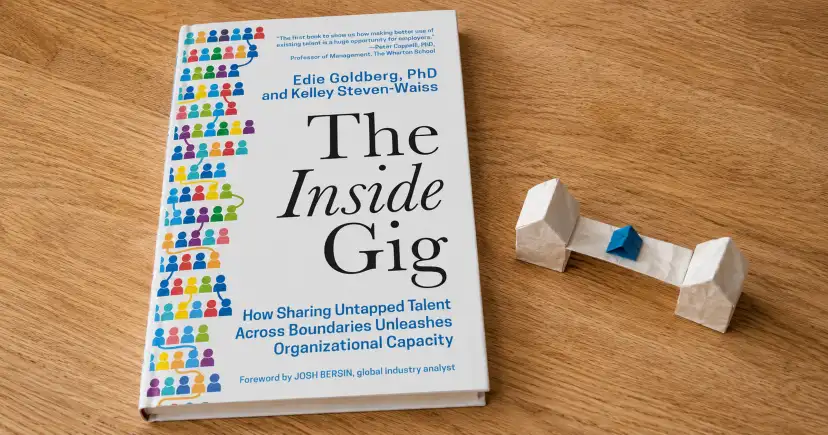
The Inside Gig: when mobility no longer depends on job openings
The Inside Gig proposes mobilizing talent through internal projects rather than waiting for a job opening, prompting an examination of what turns an opportunity into real work.
What evidence an internal transition needs to stop being a gamble
Deciding on an internal transition requires four pieces of evidence. They must separate transferable capability, adaptation still needed, confirmed gaps, and entry conditions.

Why leaders hold on to talent the organization needs to move
Why would a leader hold on to someone who could contribute more in another unit?