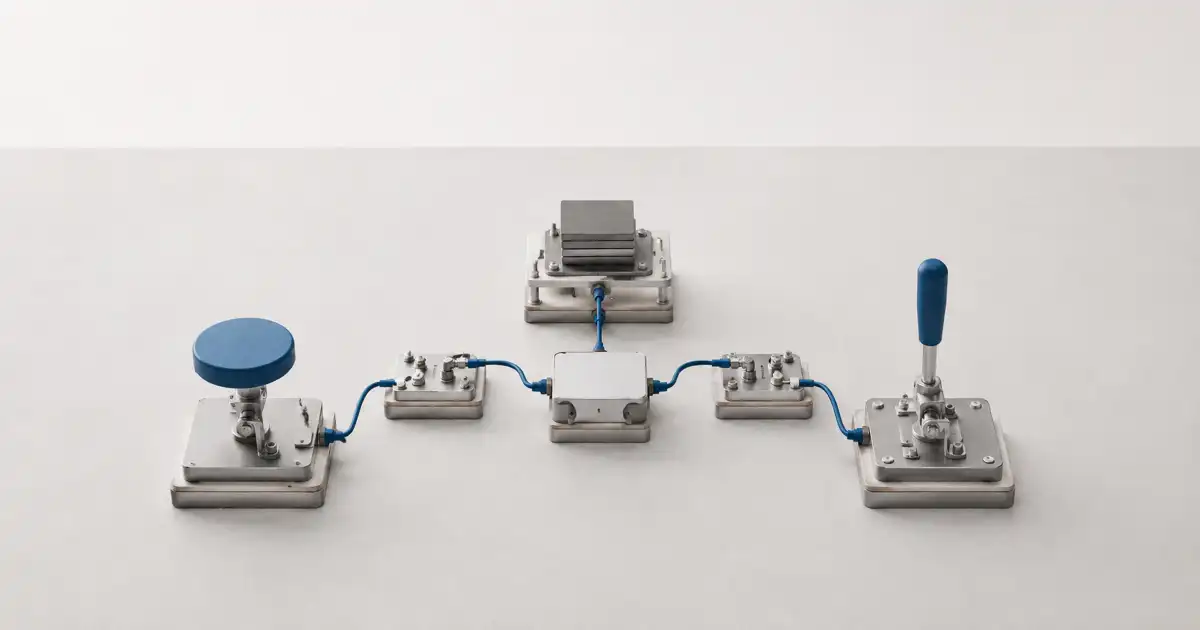
How to adapt an assessment without changing what it is meant to measure
Two people may demonstrate a capability in different ways while still meeting the same core demand. Fair adaptation requires separating the construct from barriers created by the format.
An assessment asks someone to analyze complex information within a short time limit and respond in writing. The person understands the problem, but a reading or interaction barrier interferes with their ability to demonstrate it. Changing the format may improve the interpretation. Changing the essential demand would produce a different assessment.
Define what you need to observe
Describe the construct in terms of relevant decisions, behaviors, or outcomes. Separate conditions that belong to the work from those introduced to administer the test.
If the role requires decisions under time pressure, allowing more time changes a relevant part of the demand. If speed only makes assessment scheduling easier, retaining it may measure a difficulty unrelated to the skill.
Avoid broad definitions such as “analytical capability.” Specify what information the person must integrate, what judgment they need to form, and what consequences are at stake. That precision allows the route to change without losing the object of assessment.
Identify the barrier in that situation
Do not assume a uniform solution from a condition or diagnosis. Ask what prevents the person from demonstrating the capability, when it occurs, and which modification would be effective.
Protect privacy. Whoever implements the adaptation needs to know the operational change and the conditions for administration. They rarely need access to full clinical information.
Within the US legal framework, the EEOC explains that a test may require an alternative format unless it is intended to measure the very capability affected. This principle does not replace legal advice in another jurisdiction, but it illustrates why the relationship to the work should guide the adjustment. EEOC, Job Applicants and the ADA (opens in a new tab).
Design a functionally equivalent route
Compare the demands of the original and adapted versions. Review available information, complexity, autonomy, relevant time constraints, quality criteria, and the opportunity to ask for help.
Replacing a written response with an oral one may preserve the reasoning if writing is not part of the construct. Introducing assistive technology can remove a barrier while also changing the information or support available. Equivalence is demonstrated by analyzing the task, not by asserting that both formats seem reasonable.
The Standards for Educational and Psychological Testing connect accessibility, fairness, and validity. Their scope includes educational, psychological, and employment settings. They help frame a central obligation: examine whether elements unrelated to the construct contaminate the interpretation of the result. AERA, APA, and NCME, 2014 (opens in a new tab).
Prepare the administration
Document the modification, its functional rationale, and any limits on interpretation. Inform only those who need to implement it. Ensure that instructions, technology, and the required time are available before starting.
The assessor needs to distinguish the shared criterion from the adapted route. Improvising during the session can introduce different forms of support, reveal private information, or change the demand without a record.

Test the conditions where possible. An accessible tool that works for a simple task may fail when there are multiple sources, interruptions, or specific formats.
Anticipate the effects on comparison
When several versions coexist, do not assume that the results belong on the same scale. Review whether the adaptation changes the amount of information, relevant time constraints, the opportunity to clarify instructions, or how the assessor interprets the response.
It may be necessary to calibrate using samples, review borderline cases, or restrict certain comparisons. That caution does not invalidate the adaptation. It avoids presenting something as equivalent before sufficient evidence exists.
Document what remains shared: construct, criteria, complexity, and expected standard. Also record what changed and why that element was considered unrelated to the central demand. A later decision can then use the result within known limits, rather than receiving only a label that says “adapted.”
Check the effect afterward
An adaptation is not validated simply because it was implemented. Review whether it reduced the barrier, preserved the demand, and avoided an advantage unrelated to the purpose.
Involve the person affected to understand what worked. Compare the process and the evidence produced without requiring the same response style. If the adjustment introduces a limit, record which interpretations remain defensible.
A low result does not demonstrate that the adaptation failed. A high result does not prove equivalence either. The review focuses on the opportunity to demonstrate the construct and the quality of the evidence obtained.
Avoid turning the adaptation into a permanent label
Conditions change across instruments, jobs, and moments in time. Retain the information needed to repeat the adjustment where appropriate, with restricted access and periodic review.
Good adaptation protects two commitments often presented as opposites: the demands of the work and the opportunity to demonstrate them. The review should change what creates an irrelevant barrier and preserve what the decision genuinely needs to know. It should also ask whether unequal access to opportunities affected the evidence available.
Keep exploring
Bias and fairness: the same scale does not guarantee the same opportunity to demonstrate
An uncomfortable finding in assessment is that a common scale does not produce fairness when people lack comparable opportunities to generate and present evidence.
Who can see what: access, privacy, and purpose in talent data
Who needs to see a piece of talent data, in how much detail, and for how long? The answer begins with the authorized task, not hierarchical rank.
How long does a skills assessment remain current
An older assessment may still guide development yet be insufficient for assigning a critical responsibility. Its date alone does not determine whether it remains useful.
What AI can infer about a skill—and what it should not infer
What can AI claim about a skill from digital traces? Moving from data to signal, inference, and decision involves leaps that require control.
Succession without a bench: how to measure depth and coverage
A matrix showing two successors for every position can still hide severe dependency; coverage, depth, and time reveal how resilient the network really is.
How to design a review or appeal process for an assessment
What should happen when someone challenges an assessment? A review should examine data, rules, interpretation, and use without turning the outcome into a negotiation.