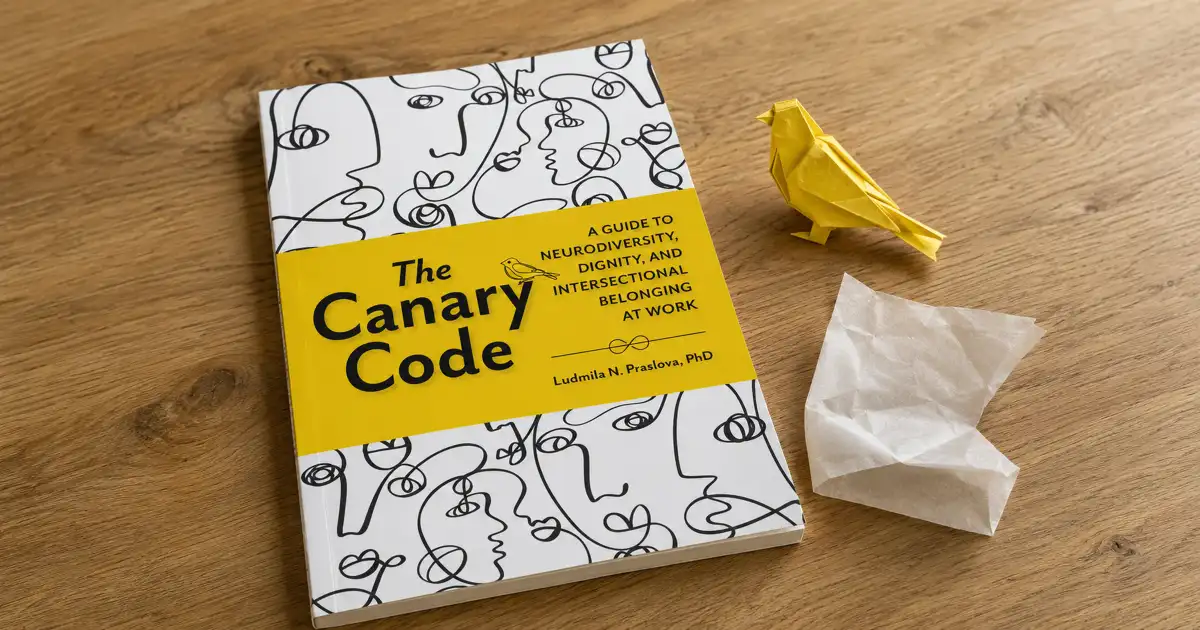
The Canary Code: when systems mistake difference for deficit
Ludmila N. Praslova’s The Canary Code uses neurodivergent experience as a signal about work systems. Its metaphor changes where diagnosis begins.
The book returns to the canary in the coal mine: its sensitivity did not cause the toxic air but warned of danger before everyone could detect it. Praslova brings that image into the workplace to challenge a familiar interpretation: when someone does not thrive, the organization locates the entire problem in the person. The book does not deny individual differences or needs. It asks how much of the difficulty comes from a rigid, ambiguous, or needlessly hostile system. Praslova, The Canary Code, 2024 (opens in a new tab).
Difference can reveal friction
A meeting without an agenda, implicit instructions, constant noise, or assessment based on speaking spontaneously does not affect everyone in the same way. For some people, the consequences appear sooner and more intensely. That does not make every discomfort evidence of a systemic failure, but it does provide a signal worth investigating.
The responsible question is not “How do we get this person to endure it?” It is “What does the work actually require, and what unnecessary barrier have we added?” Sometimes the answer will be an individual accommodation. In other cases, improving the environment reduces friction for many people: giving advance notice of decisions, making priorities explicit, or allowing time to concentrate.
Design inclusion for real people
Replacing a rigid norm with a supposedly inclusive universal solution would also be a mistake. Needs can conflict. An open space helps some people interact and overwhelms others; extensive detail gives some people direction and makes it harder for others to prioritize.
Inclusive design needs options, boundaries, and conversation. It must protect the essential outcome of the work while allowing more than one reasonable way to achieve it. When preferences cannot coexist, the decision must explain its rationale and provide ways to review its effects.
This means abandoning labels as a shortcut. Knowing a diagnosis does not automatically tell us what support someone needs or how they will contribute. Personal information should be shared for a defined purpose, with consent and limited access.
Assessment often rewards familiarity with the environment
A skills architecture can define a capability correctly and observe it through a format that introduces noise. If evidence depends on speaking first, improvising in public, or navigating unwritten rules, the result mixes competence with adaptation to a particular culture.
The solution is not to declare someone competent without evidence. It is to offer equivalent channels, separate capability from style, and recognize when there was no opportunity to observe. A written sample, a simulation shared in advance, or evidence from real work can complement a conversation without changing what the assessment is intended to measure.
The system can learn without appropriating someone’s experience
Treating someone as a canary carries its own danger: turning their difficulty into a learning tool for others. The person is under no obligation to disclose a diagnosis, educate the team, or endure friction until the system has gathered enough evidence.
Listening requires safe channels, the option of confidentiality, and a real ability to act. The organization can analyze processes, workloads, and outcomes without demanding medical disclosures. When someone shares their experience, they should know how that information will be used and what limits will apply.

Praslova, Härtel, and Hemanth propose moving from isolated interventions to systemic change for a neuroinclusive future of work. Their article is a management proposal, not evidence that applies to every context. It helps broaden the focus of intervention beyond “fixing” the individual. Harvard Business Review, 2023 (opens in a new tab).
A signal needs a response that can be checked
Not every difficulty warrants redesigning an entire process. Record where it occurs, who is affected, which work requirement is involved, and what alternative could be tested. Make reversible changes where possible and observe quality, workload, access, and unintended effects.
If an individual accommodation meets a specific need, sustain it without expecting a broader benefit. If the same barrier recurs, treat it as a design issue. And if the requirement is essential, explain it and look for ways to reduce difficulties that add nothing to the outcome.
The canary metaphor is valuable because it changes both a moral and an operational question. Sensitivity does not prove weakness, and accommodation does not prove incompetence. Sometimes an individual difference reveals, ahead of time, a condition everyone else has learned to accept as normal.
The spirit of the book is not to romanticize neurodivergence or deny the need for specific support. It is to stop assuming that the person is always the right place to intervene. Before developing resilience in the face of friction, it is worth asking why the organization chose to preserve that friction.
The book also offers a practical criterion: if a change improves clarity, predictability, or access without weakening the outcome, its value does not depend on everyone asking for it. It can become part of everyday design, with individual support reserved for needs that are genuinely specific. That distinction prevents every general improvement from becoming an administrative exception and every individual need from becoming a policy for everyone. The system learns without erasing the variety of experiences that produced the signal.
The response also needs to remain limited to the decision it is meant to inform. An accommodation, alternative evidence, or design improvement is defensible only when it clarifies which conclusion it can support.
Keep exploring
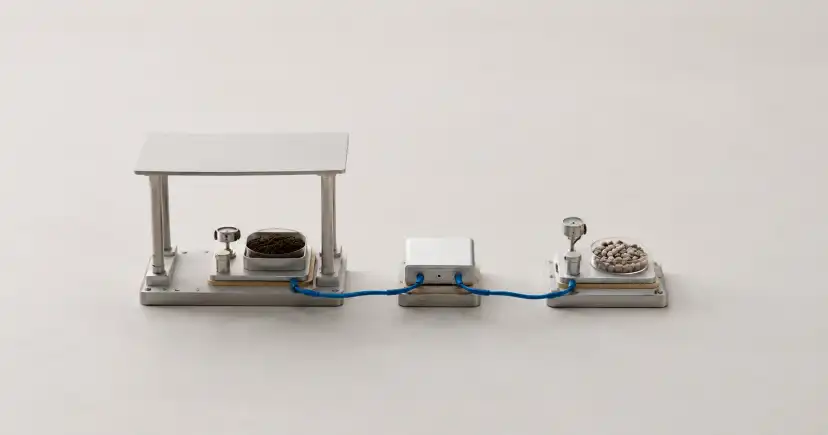
Bias and fairness: the same scale does not guarantee the same opportunity to demonstrate
An uncomfortable finding in assessment is that a common scale does not produce fairness when people lack comparable opportunities to generate and present evidence.
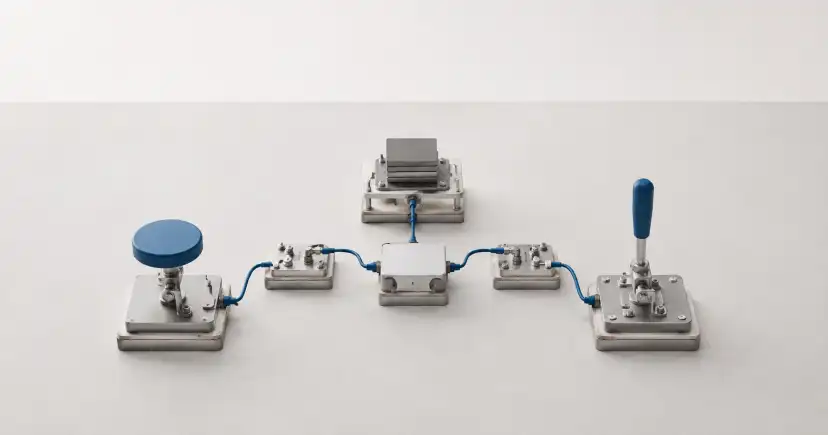
How to adapt an assessment without changing what it is meant to measure
Two people may demonstrate a capability in different ways while still meeting the same core demand. Fair adaptation requires separating the construct from barriers created by the format.
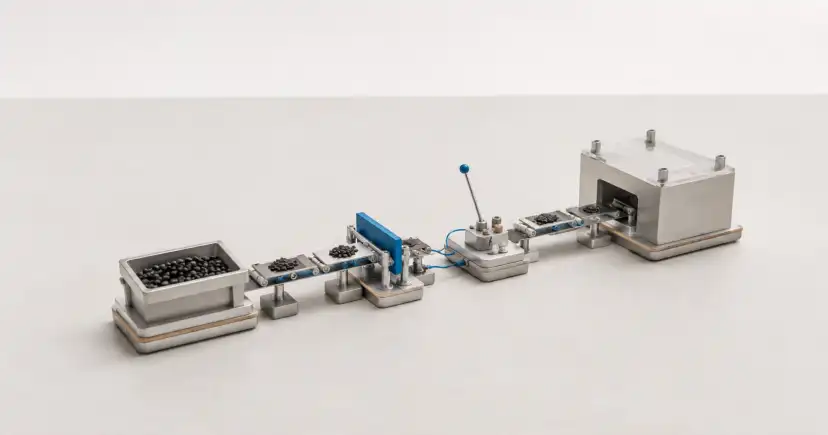
When talent automation requires mandatory human review
Even when an automated process includes a confirmation button, meaningful human review exists only when risks are defined and reviewers have real authority to change the outcome.
Who can see what: access, privacy, and purpose in talent data
Who needs to see a piece of talent data, in how much detail, and for how long? The answer begins with the authorized task, not hierarchical rank.
How long does a skills assessment remain current
An older assessment may still guide development yet be insufficient for assigning a critical responsibility. Its date alone does not determine whether it remains useful.

What AI can infer about a skill—and what it should not infer
What can AI claim about a skill from digital traces? Moving from data to signal, inference, and decision involves leaps that require control.