
Leveling and growth are not the same conversation
Closing a gap in a person's current role and preparing for the next level may involve similar actions, but they answer to different commitments. Combining them changes both the priority and the meaning of the assessment.
Confusion arises when one plan lists everything a person has not yet demonstrated: current expectations, capabilities that would be desirable for a promotion, and long-term aspirations. The result looks comprehensive. In practice, it becomes difficult to tell what is required, what is optional, and what should be addressed first.
Leveling addresses a current expectation
Leveling means closing a confirmed gap against the work the person is already expected to perform. The reference point is the current role, not an idealized version of the career.
That conversation needs to explain the expectation, the available evidence, the impact of the gap, and a reasonable time frame for addressing it. It should also examine whether the cause lies in knowledge, practice, feedback, tools, authority, or environmental conditions. Priority is usually high because the gap affects a current responsibility.
Precision still matters. A difference irrelevant to the role should not become development debt.
Growth addresses a future possibility
Growth involves expanding depth, autonomy, complexity, scope, or leadership beyond the current expectation. It may prepare someone for another role, enrich the role they already hold, or open a lateral path.
The reference point is not a failure to meet expectations, but an agreed direction. That changes both the language and the degree of choice. The person may explore alternatives, revise their aspiration, or decide that a particular path does not interest them. The organization must also avoid presenting a growth action as a promise of promotion.
The CIPD Profession Map (opens in a new tab) distinguishes levels of impact and provides references for progression within a profession. Frameworks of this kind are useful when they allow present and future to be considered without turning every difference from the next level into a current failure.
When the conversations are combined, the future becomes a deficit
Combining the two conversations has several effects.
First, someone who performs their role well may receive a report dominated by everything they have not yet demonstrated for the next role. Current performance loses recognition, and growth feels like permanent correction.
Second, priorities compete. A critical gap in present performance sits beside future capabilities with less urgency. The plan expands and attention disperses.
Third, the consequences become ambiguous. The person does not know whether an action is required to maintain acceptable performance, required for a future opportunity, or simply an exploratory recommendation. This ambiguity affects trust and the person’s ability to choose.
Fourth, follow-up uses the wrong criteria. A leveling action should demonstrate that a current expectation has been restored. A growth action should demonstrate progressive readiness for more demanding conditions. Applying the same threshold to both erases the purpose.

They can coexist without merging
Separation does not require two bureaucratic processes. A single plan can include both horizons if it makes their nature explicit.
Someone might need to improve the consistency with which they document decisions in their current role while also beginning to lead cross-functional decisions to explore a role with broader scope. Some experiences could contribute to both objectives, but the expected evidence would differ.
For leveling, we would observe whether decisions are documented with the quality and regularity required today. For growth, we would observe whether the person can establish criteria for other teams, integrate dependencies, and answer for broader consequences.
The distinction also protects mobility
When growth is framed only as moving up one level, the range of possible paths narrows. Someone may deepen a capability within their current role, move to another track, develop greater specialization, or take on temporary projects without pursuing an immediate promotion.
Separating the current gap from the future aspiration allows these alternatives to be discussed more honestly. It also prevents the organization from using the language of development to impose the demands of a higher role without acknowledging the change in responsibility.
Leveling and growth intersect in practice, but they should not begin from the same premise. Leveling asks what is missing to meet a current commitment well. Growth asks which capability a person wants and needs to build to expand their possibilities. Preserving that distinction improves the priorities, follow-up, and meaning of both conversations.
Keep exploring
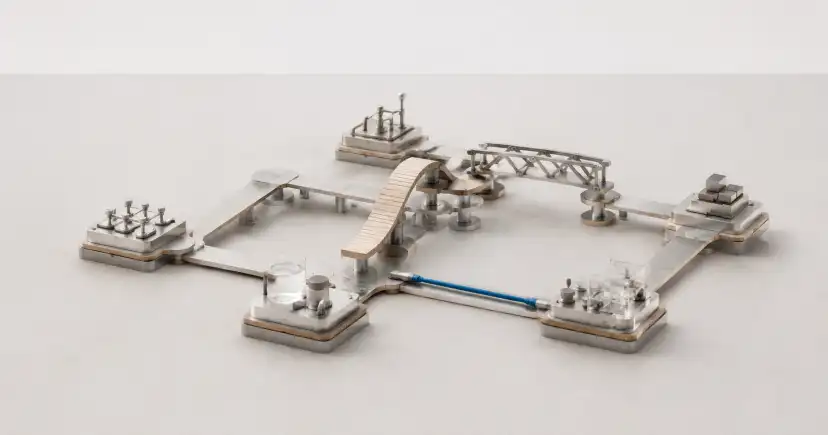
A career is not a ladder: how to represent real mobility paths
How can a career be represented when progress may come through specialization, projects, lateral moves, cross-functional leadership, and returns?
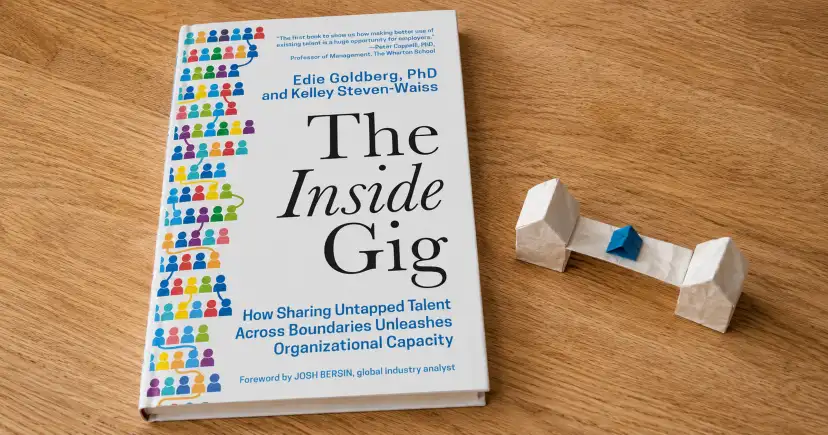
The Inside Gig: when mobility no longer depends on job openings
The Inside Gig proposes mobilizing talent through internal projects rather than waiting for a job opening, prompting an examination of what turns an opportunity into real work.
What evidence an internal transition needs to stop being a gamble
Deciding on an internal transition requires four pieces of evidence. They must separate transferable capability, adaptation still needed, confirmed gaps, and entry conditions.
Lateral mobility can be development without being a promotion
Even without a change in hierarchy, lateral mobility can develop judgment by changing the problems, relationships, and decisions a person faces.
Succession without a bench: how to measure depth and coverage
A matrix showing two successors for every position can still hide severe dependency; coverage, depth, and time reveal how resilient the network really is.

Why leaders hold on to talent the organization needs to move
Why would a leader hold on to someone who could contribute more in another unit?