
How to estimate micro-progress without promising unrealistic change
Development rarely advances through clean jumps from one level to the next. Between levels, small changes in application, autonomy, consistency, or complexity deserve recognition without being converted into percentages of mastery.
The problem with saying that someone has made 20% progress is not merely mathematical. The figure implies a continuous scale, equivalent intervals, and a known relationship between activities and change. For most organizational skills, none of those conditions has been established.
The framework: observed change and the remaining limit
Four relationships help represent progress without promising the next level:
1. Application: from understanding to using
The person moves beyond explaining a procedure and begins applying it to a real task. The relevant evidence is not course completion, but a decision, work product, or behavior in which the learning was put to use.
This step may still depend on extensive support. It demonstrates initial transfer, not independent mastery.
2. Autonomy: the amount or type of support changes
The person was already performing the task, but it required frequent instructions, a full review, or someone else’s intervention. Micro-progress occurs when support decreases without compromising the result, or when it shifts from instruction to review.
Autonomy does not mean working in isolation. It may include exercising judgment about when to ask for help and recognizing limits before they affect the outcome.
3. Complexity or scope: the capability enters a new situation
The person applies what they have learned with more variables, dependencies, ambiguity, or impact. They may also expand the scope from an individual task to coordinating one phase of the work. A single successful performance under these conditions shows expansion, but it does not yet demonstrate stability.
4. Consistency: the behavior is no longer exceptional
The evidence recurs at relevant times and not only under favorable conditions. What matters is the pattern, not a universal number of observations. The frequency required depends on how critical and variable the behavior is, as well as how often there is a genuine opportunity to demonstrate it.
These dimensions do not necessarily form a ladder. A person may gain autonomy in a familiar context without demonstrating application in a more complex one.
The minimum unit of evidence
A useful formulation contains five elements:
- behavior: what the person did, decided, explained, or produced;
- condition: the task, difficulty, or constraint involved;
- support: the intervention they received;
- effect or criterion: the basis for judging quality;
- limit: what has yet to be observed.
For example: the person led the preparation of a review with two functions, organized dependencies without an existing template, and needed support to resolve a conflict between priorities; it remains to be seen whether they maintain the same standard under a shorter deadline. This description assigns no percentage, but it makes the change visible and informs the next experience.

Activity and transfer are not equivalent
Research on training transfer has shown considerable variation and the influence of individual characteristics, training design, and the work environment. The meta-analysis by Blume and colleagues brought together 89 studies and also found that how transfer is measured affects the relationships observed (Blume et al., 2010 (opens in a new tab)).
The lesson for organizational development should be applied with care: completing an activity creates an opportunity for change, not evidence that change occurred. Mentoring can build understanding; an assignment can provide practice; feedback can help correct a decision. Progress is established by what the person can apply afterward under relevant conditions.
Not every improvement can be attributed to a single intervention. Changes in tools, team support, role clarity, or accumulated experience may all contribute. Recording the sequence helps formulate hypotheses, but it rarely supports a clean causal claim.
When to recognize and when to reassess
Micro-progress helps guide development between formal assessments. It makes it possible to adjust support, choose the next challenge, and provide specific feedback. It should not be used to continually inflate a score or announce that someone is almost at the next level.
A full reassessment makes sense when the evidence covers the decisive behaviors, appears under relevant conditions, and shows enough stability for the intended use. Until then, the record can preserve partial progress without forcing a new classification.
The value of micro-progress lies precisely in its modesty. It makes real change visible, preserves the limits of what remains unknown, and supports the next step without promising a transformation the evidence cannot yet sustain.
Keep exploring

A career is not a ladder: how to represent real mobility paths
How can a career be represented when progress may come through specialization, projects, lateral moves, cross-functional leadership, and returns?

The Inside Gig: when mobility no longer depends on job openings
The Inside Gig proposes mobilizing talent through internal projects rather than waiting for a job opening, prompting an examination of what turns an opportunity into real work.

What evidence an internal transition needs to stop being a gamble
Deciding on an internal transition requires four pieces of evidence. They must separate transferable capability, adaptation still needed, confirmed gaps, and entry conditions.

Developing a skill does not always increase organizational capability
Even when someone develops a skill, the organization may retain the same constraint if the opportunity, support, or authority to apply it is missing.

Lateral mobility can be development without being a promotion
Even without a change in hierarchy, lateral mobility can develop judgment by changing the problems, relationships, and decisions a person faces.
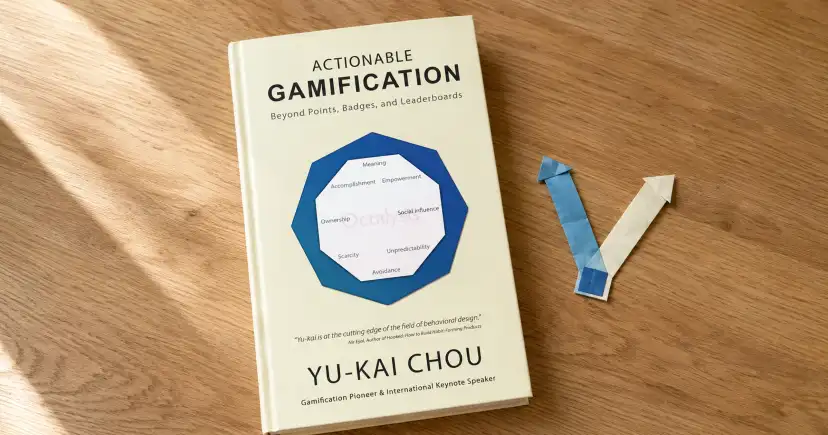
Actionable Gamification and the design of development
The most useful contribution of Actionable Gamification is not that it teaches us to turn learning into a game, but that it forces us to ask what sustains effort once novelty fades.