Turning a gap into a development plan
A gap describes the distance between performance and an expectation. Turning it into development requires interpreting its origin, setting its priority, addressing the likely cause, and then checking what changed in the work itself.
Moving directly from a low score to a course can seem efficient because it connects diagnosis to action. It also skips the hardest part: two similar results may arise from different conditions and respond in opposite ways to the same intervention.
The distance is only a starting point
OPM defines a needs assessment as the process of identifying the difference between required and current performance. Its guidance adds a crucial step: exploring the causes of that difference, the methods available to close it, and the consequences of leaving it unaddressed. U.S. Office of Personnel Management, Training Needs Assessment (opens in a new tab)
This definition comes from training and development in the US public sector. Its value here lies in separating the detection of a gap from the choice of a response.
A skills assessment may indicate performance below an expectation. If supported by sufficient evidence, that conclusion confirms a gap. It still does not explain why the gap exists. Nor does it reveal whether it is urgent, which intervention is appropriate, or how much change would be reasonable to expect.
An area remains that requires observation. Designing a plan to fill that void may end up correcting a problem the system itself created.
The same result may have different causes
One person may understand a procedure but struggle to apply it under pressure. Another may have mastered it but lack access to necessary information. A third may perform familiar tasks well but need practice with more complex situations. The visible distance would look similar; the underlying mechanism would not.
Causes may lie in knowledge, practice, feedback, experience, tools, role clarity, authority, workload, coordination, or environmental conditions. This is not an exhaustive list. It shows why interpretation must come before prescription.
The useful question is not “which course covers this skill?” It is “what condition would need to change for different performance to emerge, and what evidence would allow us to verify it?” Training is relevant when knowledge or a conceptual foundation is missing. It is less useful when the person already knows what to do but lacks the opportunity, autonomy, or resources to demonstrate it.
The size of the gap does not determine its priority
A large gap may affect a secondary capability in the current role. A small one may constrain a critical task, block an imminent transition, or increase a significant risk. Ranking gaps by magnitude alone allows the score to stand in for strategy.
Prioritization requires examining at least the role expectation, whether the skill is essential, its dependencies on other capabilities, how frequently it is used, and the consequences of leaving the distance unchanged. The feasibility of intervention also matters. A consequential gap that cannot be addressed in the short term calls for a different decision than one that a specific assignment can close.
The intervention must create the right kind of experience
CIPD’s learning needs analysis operates at the organizational, team, and individual levels. It also connects learning needs to expected performance and the selection of appropriate responses. CIPD, Learning needs analysis (opens in a new tab)
This perspective prevents every development need from being reduced to an individual activity. Some gaps call for new knowledge. Others require deliberate practice at increasing levels of difficulty, timely feedback, support, gradual exposure, or real experience within clear boundaries. In other cases, change depends on the system: access, tools, authority, or the distribution of work.
An intervention should state a hypothesis. If the primary difficulty is applying judgment under uncertainty, reading may help organize concepts, but it will not be enough to demonstrate change. A progressively challenging assignment, timely observation, and review of decisions will produce evidence closer to the performance being sought.
The hypothesis may prove wrong. The person may learn the material but fail to transfer it. Practice may reveal a previously undetected dependency. The context may change before the plan is complete. A serious development process must allow for these possibilities without immediately treating them as a lack of commitment.
Completing an activity does not prove development
Completing a course, attending a mentoring session, or participating in a project documents activity. Development requires evidence of change in application, autonomy, consistency, complexity, quality, scope, or relevant outcomes.
Otherwise, the system will tend to measure whatever is easiest to record: hours, attendance, modules, and certificates. These signals may indicate progress through the plan. They do not replace demonstration of the skill.
Reassessment does not necessarily mean repeating the same form. It should observe the manifestation the intervention was intended to change, in a comparable or more demanding context, while preserving the limits of the evidence. If the intervention was meant to increase autonomy, the review must distinguish how much support was still required.
The plan remains open until new evidence emerges
The sequence—result, interpretation, priority, intervention, evidence, and reassessment—looks linear on paper. In practice, it operates as a cycle. Each stage may alter the previous interpretation.
An intervention may reveal that the cause was framed incorrectly. Reassessment may show partial improvement or progress in a different manifestation. A change in the role may reduce the gap’s priority. The plan must remain open to such revisions.
The final document, then, should not promise a fixed path. It should record what is known, what is assumed, what change is sought, what experience will be offered, and what evidence will support the next decision. This structure protects both the organization and the individual from premature explanations.
A gap deserves attention. It does not yet contain its cause or its treatment. Development begins when the organization accepts the distance between diagnosing and deciding.
Keep exploring

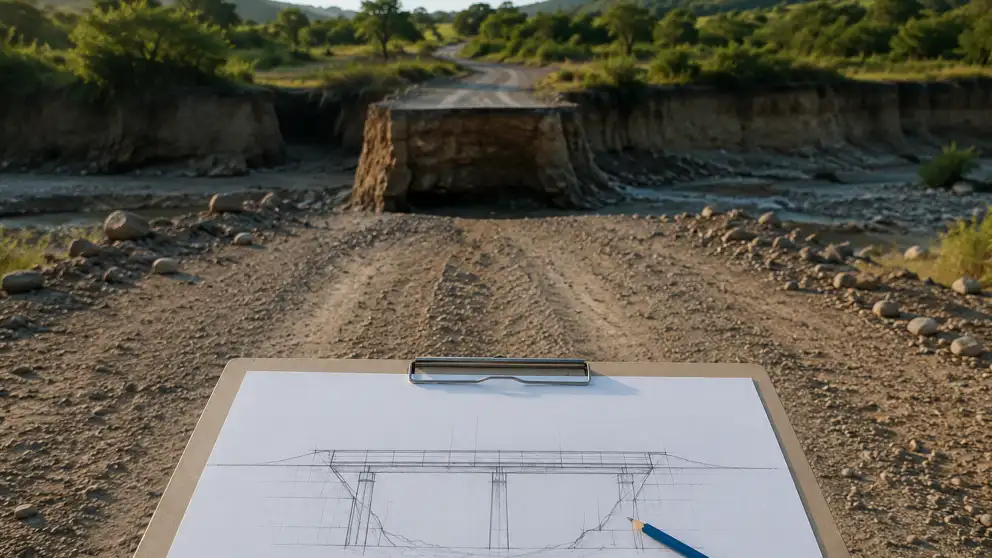
A career is not a ladder: how to represent real mobility paths
How can a career be represented when progress may come through specialization, projects, lateral moves, cross-functional leadership, and returns?
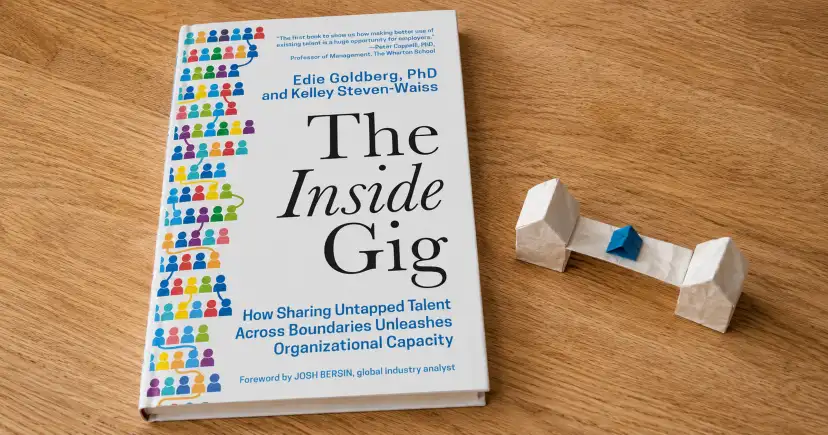
The Inside Gig: when mobility no longer depends on job openings
The Inside Gig proposes mobilizing talent through internal projects rather than waiting for a job opening, prompting an examination of what turns an opportunity into real work.
What evidence an internal transition needs to stop being a gamble
Deciding on an internal transition requires four pieces of evidence. They must separate transferable capability, adaptation still needed, confirmed gaps, and entry conditions.

Developing a skill does not always increase organizational capability
Even when someone develops a skill, the organization may retain the same constraint if the opportunity, support, or authority to apply it is missing.
Lateral mobility can be development without being a promotion
Even without a change in hierarchy, lateral mobility can develop judgment by changing the problems, relationships, and decisions a person faces.
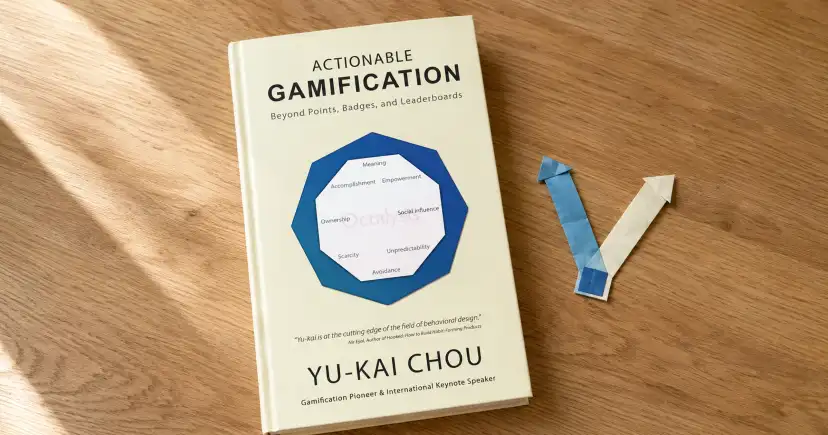
Actionable Gamification and the design of development
The most useful contribution of Actionable Gamification is not that it teaches us to turn learning into a game, but that it forces us to ask what sustains effort once novelty fades.