
How to prioritize gaps without creating an endless list
An assessment can identify ten gaps without producing a single priority. When every gap becomes an action, the development plan stops providing direction: it spreads attention, combines different degrees of urgency, and makes progress nearly impossible to recognize.
Prioritization is not a matter of sorting scores from lowest to highest. Distance from an expectation is only one part of the decision. A small gap may block a critical responsibility; a large one may be irrelevant to the current work or impossible to address yet.
These factors do not need to be combined in a formula. Use them to eliminate, sequence, and choose.
Clean the list before prioritizing
Only confirmed gaps should enter the process: a relevant expectation exists, along with sufficient evidence of performance below it. A lack of observation belongs in an evidence queue, not in the development plan.
Remove problems that individual action cannot solve as well. Insufficient authority, inadequate tools, contradictory processes, or excessive workloads may affect performance without constituting a capability gap. In these cases, the intervention belongs in the system of work.
This initial screen often shortens the list more than any matrix that follows.
Impact: which decision or outcome changes?
Examine the relationship between the gap and the work, not the skill’s abstract prestige. A capability has high impact when it materially affects an outcome, responsibility, risk, or transition the person needs to sustain.
Ask for a reasonable causal explanation: how does the gap constrain performance today, and which evidence shows it? If the answer remains generic, the priority has not yet been demonstrated.
Urgency: when does it become material?
Urgency is not the same as organizational anxiety. It depends on a real window: a new responsibility, a regulatory change, an upcoming project, or a risk that is already producing consequences.
A high-impact gap may wait if the relevant situation will not arise for months and another need is immediate. Conversely, a moderate difference may require attention now because the person will soon encounter the context in which it matters.
Define the date or condition that makes the need material. Without that anchor, everything will be labeled urgent.
Dependency: what needs to happen first?
Some capabilities develop more readily on top of a prior foundation. Others unlock opportunities to practice several gaps.
If someone needs to improve how they lead complex conversations but cannot yet structure evidence about performance, developing the second capability first may facilitate the first. This is not because a universal hierarchy exists, but because one capability is a dependency in that context.
Feasibility: are the conditions in place to intervene and observe?
A priority without an opportunity to practice is only an intention. Determine whether relevant tasks, support, feedback, time, tools, and a reasonable way to observe change will be available.
Feasibility should not reward only what is easy. It helps distinguish among acting now, preparing the conditions, and explicitly postponing the work. A critical gap with low feasibility may require redesigning the work before requesting individual development.

Choose a small number of priorities with different functions
After applying the filters, a useful combination might include:
- one critical gap because of its impact or risk;
- one enabling capability that unlocks others;
- one feasible improvement that generates early evidence and learning.
This is not a mandatory quota. Sometimes a single priority deserves all the attention. The objective is for every selected item to have a distinct, defensible reason—not to fill a template with three actions.
For each priority, document the expectation, current evidence, hypothesis about the cause, intervention, required conditions, and evidence that would indicate progress. Completing an activity does not demonstrate development; reassessment should examine changes in application, autonomy, consistency, complexity, or quality.
Keep what was not chosen visible
Prioritization does not erase the other gaps. It places them in different states: on hold, dependent, lacking the necessary conditions, low in current impact, or pending new evidence.
This visibility reduces two risks. It prevents postponed work from reappearing as a new urgency with no institutional memory, and it allows the decision to be revisited when the role, context, or strategy changes.
A focused plan does not try to close every distance at once. It chooses where improvement can genuinely change the work and preserves a clear explanation of why everything else can wait.
Keep exploring
A career is not a ladder: how to represent real mobility paths
How can a career be represented when progress may come through specialization, projects, lateral moves, cross-functional leadership, and returns?
The Inside Gig: when mobility no longer depends on job openings
The Inside Gig proposes mobilizing talent through internal projects rather than waiting for a job opening, prompting an examination of what turns an opportunity into real work.
What evidence an internal transition needs to stop being a gamble
Deciding on an internal transition requires four pieces of evidence. They must separate transferable capability, adaptation still needed, confirmed gaps, and entry conditions.

Developing a skill does not always increase organizational capability
Even when someone develops a skill, the organization may retain the same constraint if the opportunity, support, or authority to apply it is missing.
Lateral mobility can be development without being a promotion
Even without a change in hierarchy, lateral mobility can develop judgment by changing the problems, relationships, and decisions a person faces.
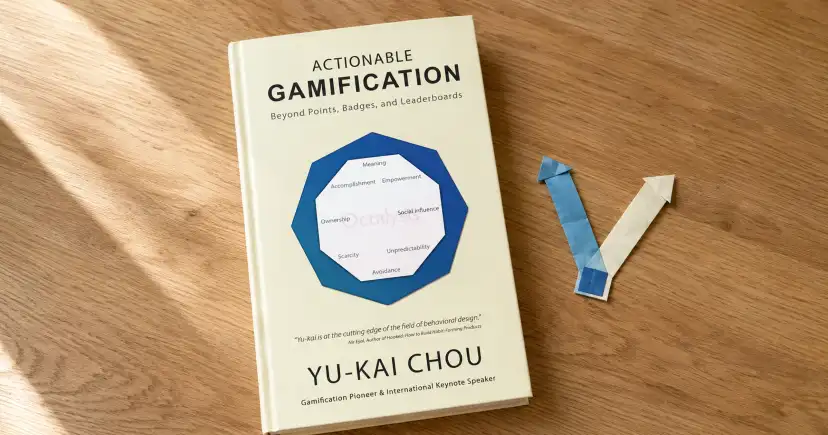
Actionable Gamification and the design of development
The most useful contribution of Actionable Gamification is not that it teaches us to turn learning into a game, but that it forces us to ask what sustains effort once novelty fades.