Lateral mobility can be development without being a promotion
Even without a change in hierarchy, lateral mobility can develop judgment by changing the problems, relationships, and decisions a person faces.
Consider a specialist who wants to expand her contribution without seeking a promotion yet. Career conversations often blend growth with upward movement and leave out an important part of professional development.
The specialist works in fraud prevention and moves temporarily from investigating suspicious transactions to designing the customer onboarding process. The move does not raise her hierarchical level. It does change when she contributes: instead of analyzing signals after the problem has occurred, she begins deciding which controls should be incorporated beforehand.
She retains some of her knowledge but must apply it in a different sequence, negotiate with different functions, and consider consequences she previously received as inputs. Mobility produces learning because it changes the contribution, not because it changes the job title.
Lateral describes the hierarchy, not the experience
Two positions may sit at the same level yet demand very different breadth. One may focus on resolving cases within known rules. The other may require translating specialized knowledge, agreeing on criteria across areas, and anticipating effects on customers or operations.
That is why comparing titles or bands is not enough. It is better to ask which new decisions the person will need to make, with whom they will need to coordinate, and which consequences they will need to learn to recognize.
The OECD examines strategic mobility alongside learning, development, and workforce flexibility. Its review focuses on public employment but offers a useful distinction for other contexts. Mobility becomes valuable when it has a purpose and the conditions to support it are in place. OECD, Public Employment and Management 2023 (opens in a new tab).
A move without a purpose may change the setting without developing anything relevant. It may also increase political exposure or workload without truly broadening judgment.
Development can be observed in three shifts
The first shift is in context. The specialist must interpret her knowledge at a different stage of the customer journey. What used to be a signal to investigate now becomes a variable for designing controls that do not block the entire operation.
The second shift is in relationships. She no longer speaks mainly with other fraud specialists. She needs to understand commercial, technological, and regulatory constraints and explain risks without expecting one function to decide for all the others.

The third shift is in responsibility. Instead of advising on one case, she participates in a decision that will affect many future cases. The technical skill remains relevant, but applying it requires a different combination of autonomy, scope, and anticipation.
The risk is turning mobility into accumulation
A lateral move loses legitimacy when the person retains all their previous responsibilities and receives the new ones as well. There is no transition in that scenario: there are two overlapping jobs.
It also fails when the original team remains dependent on constant consultation. The person moves on the org chart, but their knowledge remains trapped in the previous position. Every emergency pulls them back to the starting point and limits their ability to join the new context.
Before the change, the parties should agree on which responsibilities will be transferred, who will receive the critical knowledge, and how long support will remain available. Those decisions protect the person as well as the source and destination teams.
Voluntary participation matters. A move presented as development should not be used to displace someone without a transparent conversation about its purpose, duration, expectations, and recognition.
Recognize growth without manufacturing a promotion
If upward movement is the only institutional signal of progress, the organization will end up undervaluing experiences that increase versatility and judgment. That does not mean calling every move a promotion or promising an automatic reward.
It means recording what changed. Can the person now operate in more than one context? Do they integrate variables they previously treated separately? Can they connect functions that did not share a language? Do they make decisions with greater reach within their level?
This evidence builds on capabilities that can move across contexts and supports development conversations, future assignments, and mobility. It also helps prevent the change from being reduced to a line in the person’s employment history.
The analysis connects with Internal mobility—changing roles without starting from scratch. Transferable capabilities reduce part of the distance, but they do not eliminate the need to learn the new context. It also sets up a more uncomfortable question: what happens when a leader believes that moving a valuable person threatens their team’s immediate performance?
Before approving the next lateral move, the organization should review the new contribution, the conditions for learning, and how it will recognize growth.
To extend this reading, see The Inside Gig: when mobility no longer depends on job openings, which develops a complementary dimension of the problem.
Keep exploring
A career is not a ladder: how to represent real mobility paths
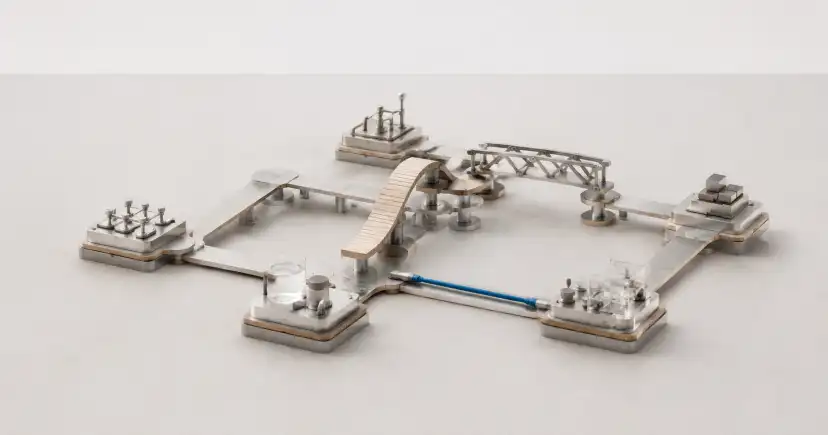
How can a career be represented when progress may come through specialization, projects, lateral moves, cross-functional leadership, and returns?
The Inside Gig: when mobility no longer depends on job openings
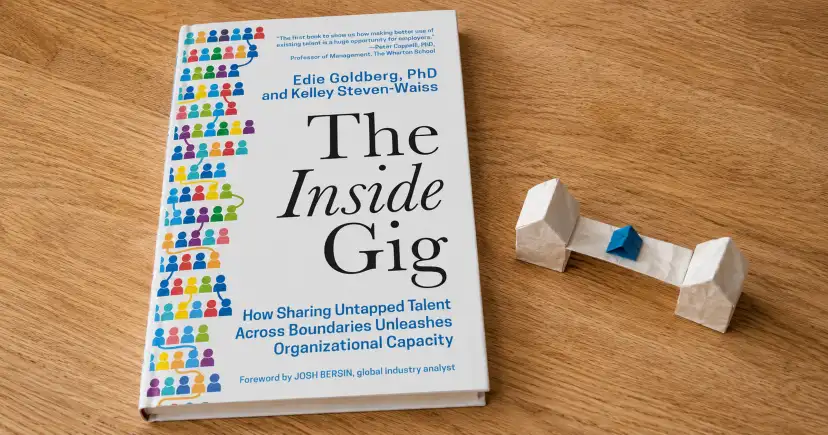
The Inside Gig proposes mobilizing talent through internal projects rather than waiting for a job opening, prompting an examination of what turns an opportunity into real work.
Succession without a bench: how to measure depth and coverage
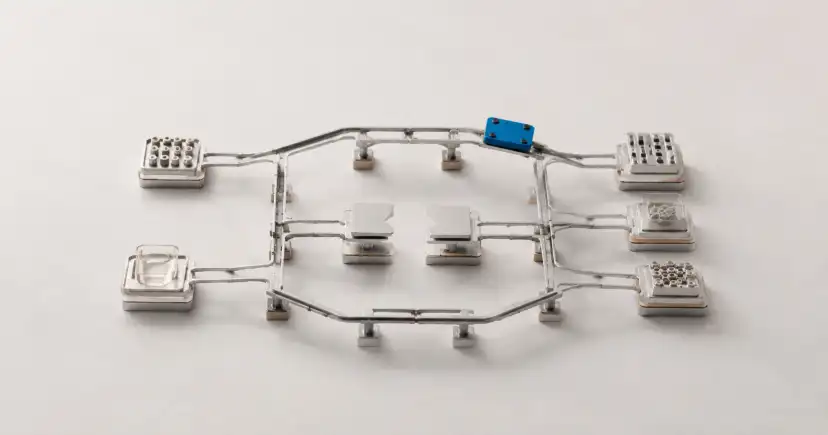
A matrix showing two successors for every position can still hide severe dependency; coverage, depth, and time reveal how resilient the network really is.
What evidence an internal transition needs to stop being a gamble
Deciding on an internal transition requires four pieces of evidence. They must separate transferable capability, adaptation still needed, confirmed gaps, and entry conditions.

Why leaders hold on to talent the organization needs to move
Why would a leader hold on to someone who could contribute more in another unit?
Succession as an organizational capability, not a secret list
A list of possible replacements can create a sense of control while leaving intact the dependency that threatens the organization. Succession becomes a capability when the organization builds coverage, alternatives, and learning before a vacancy arises.