
Adoption begins when the model changes a decision
Even when usage is high, a model may not yet have been adopted: the decisive evidence appears when it changes a real decision and that change can be reconstructed.
Articles about connecting capabilities, priorities, and organizational transformation.
26 articles
Even when usage is high, a model may not yet have been adopted: the decisive evidence appears when it changes a real decision and that change can be reconstructed.

Should the organization create a new role or redistribute the work? The answer depends on the stability, distinctiveness, and accountability of the missing contribution.

Before recommending training in response to a gap, compare four possible sources: individual proficiency, team coverage, interfaces, and the operating model.

Staffing decisions require knowing how many people there will be. Capability planning also requires understanding what work they can sustain, under which constraints, and with what coverage.

David Teece locates strategic capability in the ability to integrate, build, and reorganize resources. His perspective explains why a skills inventory provides information about people but does not demonstrate organizational adaptation. The decisive moment comes when the environment demands change.

The org chart seems to explain how the organization functions because it sets out its formal authority. Actual work also depends on decisions, exchanges, and relationships that cross those lines.

Even when the initial test works, different areas begin to interpret the model in incompatible ways as it expands. Preserving quality requires distinguishing the meaning that must remain stable from the methods that can be adapted.

Organizations can measure well and decide badly when their model leaves out dynamics that are already affecting coordination, trust, and capability.
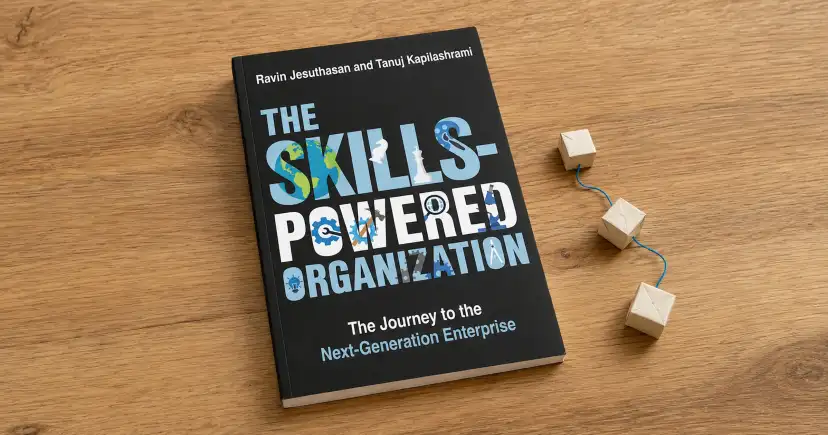
The Skills-Powered Organization proposes that skills should stop being auxiliary human resources data and become the unit through which a company designs work, allocates talent, and reinvents itself. Its most important contribution also defines its greatest demand: the change affects the organization's operating system.

A skills pilot does not need to demonstrate the final impact of the entire initiative immediately. Before it is scaled, the pilot needs to produce enough evidence to show whether the process is understood, can be carried out, yields consistent information, and improves real decisions.

The pilot began with an understandable ambition: if skills were meant to serve the entire organization, it seemed more efficient to design a solution for everyone from the start. That decision turned a learning exercise into a program that could not get started.

The first track in a skills pilot should generate useful learning without sacrificing relevance. Choosing it requires separating indispensable conditions from criteria used to compare viable candidates.