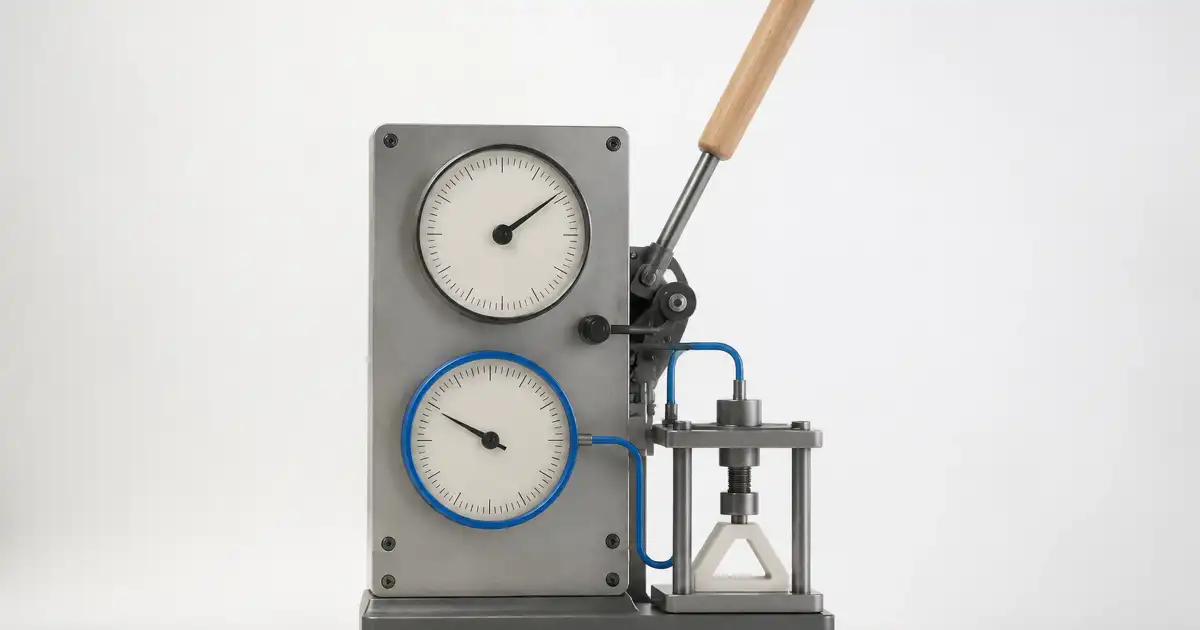
Confidence is not competence
Confidence becomes visible before competence does. It appears in the speed of a response, the firmness of a voice, and the willingness to take up space. Competence, by contrast, can be supported only by relevant evidence of what a person can do under specific conditions.
That difference makes confidence a highly influential signal in talent decisions. When performance is difficult to observe, judgment looks for signals that are available. Self-assurance, fluency, visibility, and speed fill the gap—not because evaluators are incapable of distinguishing those signals from competence in theory, but because a clear signal tends to prevail over incomplete evidence.
The outcome does not always favor the most competent person. It favors the person who makes it easier to imagine that they are.
A signal that can be informative, but is not conclusive
It would be a mistake to treat all confidence as mere appearance. Self-efficacy—the belief in one’s ability to carry out actions—influences initiative, persistence, and willingness to face challenges. Someone who has mastered a task has often accumulated reasons to act with confidence.
The problem begins when that possible relationship is treated as evidence about a particular person. Confidence can also arise from social familiarity, status, a lower perception of risk, verbal ease, or an inaccurate estimate of one’s own abilities. A competent person may express caution because they recognize complexity, are operating in a new context, or have learned to calibrate what they do not yet know.
The literature on overconfidence helps clarify the phenomenon. Moore and Healy distinguish between overestimating one’s own performance, placing oneself above others, and showing excessive precision about what one believes one knows. These are not the same thing, and they vary with task difficulty. The useful conclusion for workplace assessment is not that confident people are wrong, but that expressed confidence is not consistently or strongly enough related to accuracy to serve as proof.
How the confusion arises
Competence must be defined in relation to a particular kind of performance. Someone may be competent at solving a certain kind of problem, operating with a given degree of autonomy, or responding under specific conditions. When the expectation is described vaguely, any general impression can take its place.
Assessing it also requires a sample. If a leader observes few consequential decisions but hears the person contribute every week, visibility can outweigh less visible evidence of quality. Speed has a similar advantage: it is immediate and comparable, even though pausing to verify may be part of good performance in some tasks.
Finally, confidence influences opportunity. Whoever volunteers first receives more visible assignments, accumulates experience, and produces new evidence. The initial impression can end up creating part of the reality that later seems to confirm it. Meanwhile, a less visible person has fewer opportunities to demonstrate what they can do.
Bias is therefore not confined to the final rating. It also shapes the distribution of projects, conversations, sponsorship, and room to make mistakes.
Separate expression from performance
A more robust assessment need not penalize confidence or reward modesty. It needs to ask what evidence supports each inference.
When someone answers confidently, the assessor can examine the reasoning, the decisions considered, the limits acknowledged, and the outcomes achieved. When someone answers cautiously, the assessor can avoid interpreting tone as lack of mastery and ask for the same evidence. The standard should remain stable even when the way it is presented changes.

It is also worth designing comparable opportunities. Requesting comparable deliverables, observing representative tasks, and documenting decisions reduce dependence on who speaks most or volunteers first. It does not eliminate professional judgment; it gives judgment a clearer focus.
In development conversations, confidence can be treated as a variable in its own right. One person may have the capability and need greater confidence to demonstrate it. Another may act confidently and need feedback to calibrate their limits more accurately. These situations call for different interventions. Combining them into a single score weakens the diagnosis.
Caution is not beyond scrutiny
Expression How someone communicates confidence or caution.
Performance The decisions and outcomes a person can reliably deliver.
Opportunity What access they had to produce comparable evidence.
Separating confidence from competence does not mean idealizing doubt. In some roles, communicating clearly, deciding under pressure, or conveying assurance is a legitimate part of the expectation. Those behaviors can be assessed, provided they are described as such and their effect is observed.
The difference lies in not using them as a universal substitute. If executive presence matters, the organization should explain what it means in that work, which behaviors demonstrate it, and for which decision it is relevant. A firm voice does not prove sound judgment; a hesitant voice does not prove depth either.
Confidence can suggest a hypothesis. Assessing competence requires following that hypothesis all the way to the evidence.
Keep exploring

Sources of Power: when expert intuition deserves a place in assessment
Sources of Power makes it possible to treat expert intuition as situated recognition without turning experience or confidence into unquestionable authority.
How to add a 360 without turning it into an average
A 360 improves an assessment when it preserves what each source observed, from which relationship, and within what limits; averaging first destroys that information.
How to design a calibration session that does not turn into a negotiation over scores
How do you keep a calibration session from turning into a negotiation over scores? Bring evidence, context, and criteria into the conversation before the number.
Why leaders distrust skills assessments
When a leader distrusts a skills assessment, the usual reaction is to attribute it to resistance to change. But distrust may also point to genuine problems with burden, observation, interpretation, or consequences that the design has not yet resolved.

The leader who assesses without observing
The authority to assess comes with the role. The quality of the judgment comes from the evidence. When the two are confused, familiarity, reputation, and visible results take the place of observation.

Perception is not reality, but it should not be ignored
A perception does not capture reality like a camera. It does, however, record how someone interprets what they could observe within a particular relationship, at a particular moment, and against specific expectations. That limitation does not make perception irrelevant; it determines how perception should be read.