When to create a new role and when to redesign an existing one
Should the organization create a new role or redistribute the work? The answer depends on the stability, distinctiveness, and accountability of the missing contribution.
Before creating a role, reconstruct the outcome that currently has no owner. Over several months, different people may have addressed parts of it until a new title began to seem like the obvious solution.
It may be the right decision. It may also add another box to the org chart without resolving the work that crosses several existing boxes.
The distinction becomes clearer if we begin with the unattended outcome rather than the desired title. Which contribution is missing? How often? Which decisions does it include? Who is currently accountable for its consequences?
First describe the work that is not being sustained
Avoid starting with a list of generic responsibilities. Reconstruct specific episodes in which the result failed, arrived late, or depended on informal arrangements.
Identify the necessary activities, but do not stop there. Two roles may perform similar tasks yet differ in the complexity they integrate, the autonomy with which they decide, or the reach of the consequences for which they are accountable.
Permanence also matters. A recurring and predictable need may justify stable accountability. A temporary peak, a transition, or a project with an end date may require an assignment rather than a permanent role.
Formal position classification and organization design are not the same as an internal role architecture. Even so, OPM guidance offers a useful precaution: describing a position requires attention to the work assigned and its relevant factors, not just titles. U.S. Office of Personnel Management, Introduction to the Position Classification Standards (opens in a new tab).
Four questions for making the decision
Is there a contribution that clearly belongs to no one today?
If work persistently falls between functions and requires the integration of decisions that no one can make, there may be room for a new role. The answer changes if an existing function should already take responsibility but its boundaries, authority, or priorities are poorly defined.
Is the contribution sufficiently stable?
A role needs a reason to exist that outlasts a specific project. If demand depends on a six-month implementation, a temporary mission may be more honest and reversible.
Can it be integrated without making an existing role incoherent?
Adding a responsibility has costs. It may reasonably expand a role’s scope or combine incompatible purposes. When one person must optimize two outcomes that require opposing criteria, accumulation can undermine both.
Will the new role have authority, interfaces, and a success criterion?
Signs that redesign is appropriate
Redesign when the work already forms part of a role’s purpose but has been buried under inherited tasks. Redesign may also be appropriate when several people duplicate controls because no one trusts the handoff, or when a decision was historically escalated but could now be moved closer to the operation.
In these cases, the intervention may involve removing responsibilities, redistributing authority, modifying sequences, or clarifying interfaces. The change can be profound even if no new name appears on the org chart.

CIPD describes organization design as an activity related to how the organization structures itself to fulfill its purpose. This reminds us that the role is part of a system, not an isolated solution. CIPD, Organisation design (opens in a new tab).
Signs that creation is appropriate
Creating a role makes more sense when several conditions coincide. There is an identifiable and persistent contribution, it requires distinct judgment and accountability, and it cannot be integrated without disrupting existing roles.
Consider an organization that needs to govern automated decisions. If reviews are currently divided among data, legal, operations, and product, it should first clarify which work belongs to each function. If the cross-functional decision about criteria, exceptions, and monitoring also remains unowned, a new and stable contribution with defined authority may emerge.
The role’s name should come later. Naming it too early invites the organization to copy titles from the market before understanding its own problem.
Test the design before making it permanent
A temporary mission makes it possible to observe volume, conflicts, interfaces, and the authority required. During the test, document which decisions the person makes, which continue to be escalated, and which prior work stopped being done.
At the end, review three possible outcomes. The contribution may justify a permanent role. It may fit better in an existing role once the boundaries are clarified. Or it may disappear after correcting an operating rule that created unnecessary work.
This approach continues The org chart is not a map of the work: the visible structure is not enough to understand the contribution. It also sets up Work without Jobs and the missing link between skills and work, where the unit of design shifts from the whole job to components of the work.
Creating a role is an architecture decision, not a nominal reaction. So is redesigning one. In both cases, the test is the same: the relevant work must find a clear, sustainable, and accountable contribution.
To extend this reading, see Designing the interfaces between teams is also designing capability, which develops a complementary dimension of the problem.
When a new contribution connects functions without formal management authority, it also needs decision boundaries and a visible way to recognize its scope. Representing it without inventing informal authority keeps the new role from relying on persuasion alone.
Keep exploring
What must remain common and what can vary across areas
Even when two areas work differently, they can still share an architecture. Adaptation stops being local when it changes meaning, comparability, or the rights attached to use.
When to split, merge, or retire a skill
Splitting, merging, and retiring a skill correct different failures. Even if the catalog looks tidier after the change, the choice depends on which distinction in the work must be preserved and which decisions will change.
Designing the interfaces between teams is also designing capability
On the eve of a launch, an incomplete interface can immobilize capability that each team does possess.
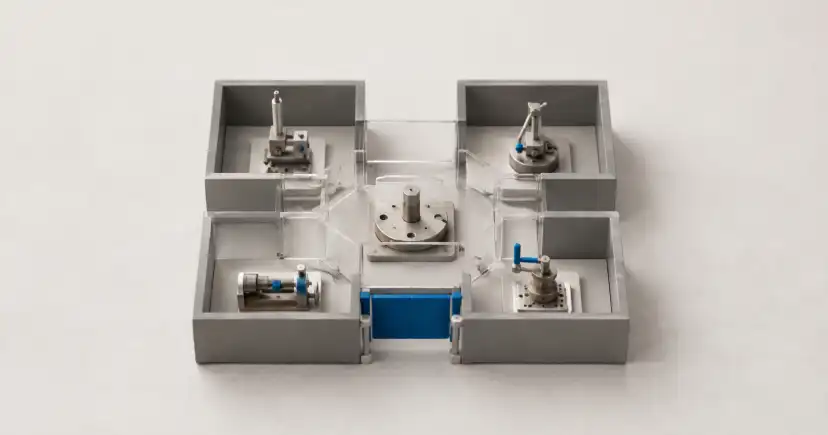
The organization can have the right skills and the wrong operating model
An organization can have the right skills and still fail to produce the expected capability. Even when the inventory is accurate, the rules of work may prevent those skills from being used.
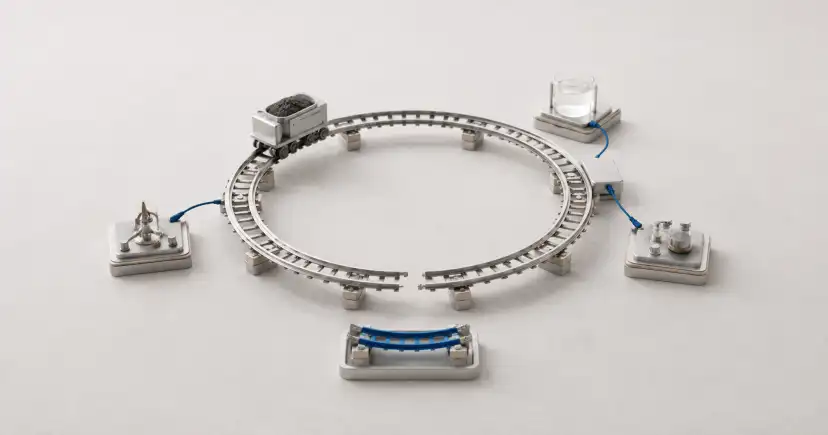
How to maintain an architecture without turning it into a permanent project
Maintaining an architecture starts with distinguishing a signal worth recording, a small change with a clear owner, and a structural decision that deserves deliberate review.

Generalists, specialists, and hybrid roles: what the architecture should decide
Does the organization need breadth, depth, or integration? Generalist, specialist, and hybrid are possible answers, not identities the architecture should fix permanently.