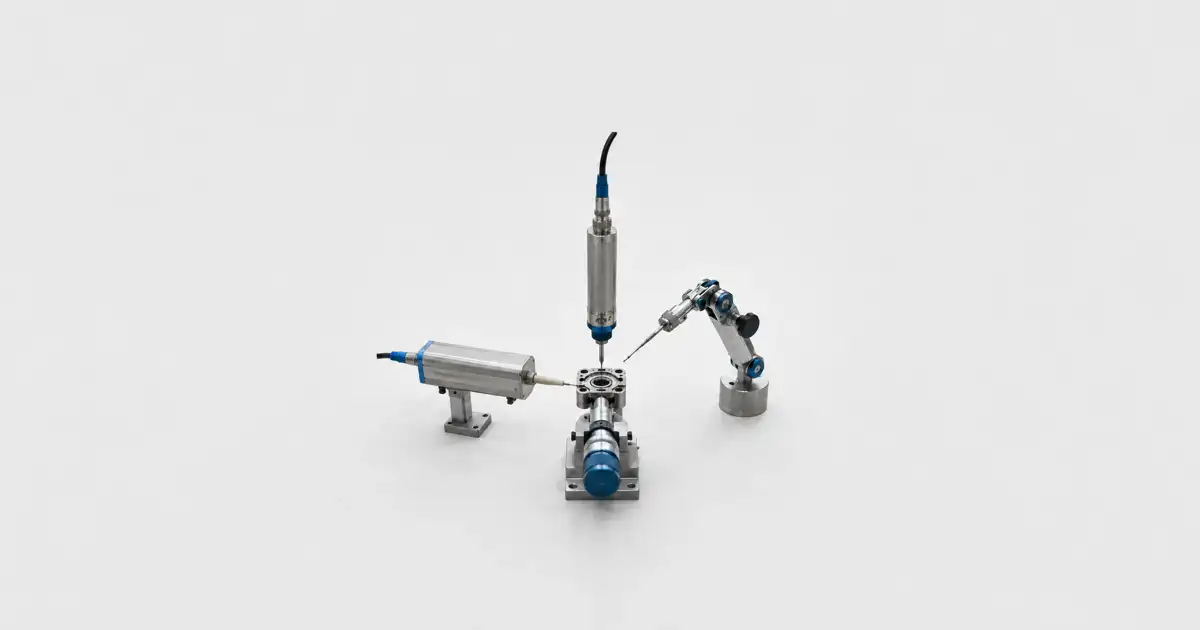
Pulse, Check, Interview, and Target answer different questions
Pulse, Check, Interview, and Target can coexist within the same assessment architecture, but they are not longer or shorter versions of the same instrument. Each mode answers a different question, produces a different kind of evidence, and supports conclusions with a distinct scope.
These names do not constitute a universal standard. Here they represent four operating contracts: exploring a signal, verifying a state, understanding someone’s reasoning, and gathering focused evidence for a decision. The distinction matters because it keeps one mode from being held to a degree of certainty that only another can support.
Pulse: where is a closer look warranted?
Pulse captures broad signals while imposing a low burden. It can reveal perceptions, variation, or areas with enough interest, disagreement, or change to justify further investigation.
Its strengths are coverage and timeliness. It can include more people or repeat the observation more frequently. Its limitation is depth: an aggregated perception does not, by itself, demonstrate a capability, explain its cause, or identify the right intervention.
It may indicate that a team perceives difficulty coordinating decisions across functions. It does not yet establish who has a gap or which skill might explain it.
Check: what evidence exists relative to a defined expectation?
Check narrows the scope and adds structure. It starts with a known expectation and seeks to verify a state through anchors, observable indicators, and sources with relevant access.
It can support a development conversation, a readiness review, or an updated baseline. Confidence in its result depends less on the number of items than on the alignment among the subject, the evidence, and the interpretation rule.
The risk emerges when it becomes a checklist of unsupported statements. Marking that someone has or does not have a skill explains neither the level nor the context nor whether the evidence is sufficient.
Interview: how does the person interpret and decide?
Interview explores reasoning that a score cannot reveal. Through structured questions, cases, or the reconstruction of past experiences, it can examine how someone defines a problem, which signals they consider, which alternatives they rule out, and where they recognize limits.
Its strength is contextual richness. It also carries a risk: mistaking an eloquent explanation for demonstrated performance. An interview can provide evidence of knowledge, judgment, and reflection; only under certain conditions can it support an inference about effective application.
To preserve comparability, the questions, criteria, and method for recording evidence must be established in advance.
Target: what needs to be demonstrated for this decision?
Target begins with a bounded decision. Rather than covering the entire architecture, it identifies the capabilities and observable indicators that matter to a specific move, responsibility, or risk.
It can combine work samples, representative tasks, historical evidence, and selected sources. Its strength is relevance: it concentrates effort where a conclusion will have consequences. Its limitation is equally important. A Target does not produce a complete profile of the person; it answers only as far as the defined objective extends.
The mode becomes dangerous if the objective is set after the results are known or if only evidence that confirms a prior conclusion is selected. The design should state the question, criteria, and intended use in advance.

The choice depends on the question and the consequence
Choosing among the four modes should not begin with the time available. A brief use of the wrong mode is still a poor assessment.
| If you need… | Main mode | Defensible result |
|---|---|---|
| identify where to investigate | Pulse | signal or pattern that warrants attention |
| verify a defined expectation | Check | supported state and limits of the evidence |
| understand reasoning and context | Interview | structured qualitative evidence |
| support a focused decision | Target | conclusion limited to the intended use |
The modes can be combined, but the combination needs a rationale. A Pulse can identify a question that is then explored through Interview. A Check can reveal insufficient evidence and lead to a Target. Not every process needs to pass through all four modes, and their results should not be averaged as though they were equivalent.
Contemporary assessment standards locate validity in the interpretations and uses of results. Knowing What Students Know describes three coordinated elements: a model of the capability, the observations that make it visible, and the interpretation connecting the two. The four modes differ precisely in the form and depth of those observations.
The right choice is not the most comprehensive instrument. It is the evidence contract proportionate to the question the organization needs to answer.
Keep exploring
Bias and fairness: the same scale does not guarantee the same opportunity to demonstrate
An uncomfortable finding in assessment is that a common scale does not produce fairness when people lack comparable opportunities to generate and present evidence.
How to adapt an assessment without changing what it is meant to measure
Two people may demonstrate a capability in different ways while still meeting the same core demand. Fair adaptation requires separating the construct from barriers created by the format.
Who can see what: access, privacy, and purpose in talent data
Who needs to see a piece of talent data, in how much detail, and for how long? The answer begins with the authorized task, not hierarchical rank.
How long does a skills assessment remain current
An older assessment may still guide development yet be insufficient for assigning a critical responsibility. Its date alone does not determine whether it remains useful.
What AI can infer about a skill—and what it should not infer
What can AI claim about a skill from digital traces? Moving from data to signal, inference, and decision involves leaps that require control.
Succession without a bench: how to measure depth and coverage
A matrix showing two successors for every position can still hide severe dependency; coverage, depth, and time reveal how resilient the network really is.