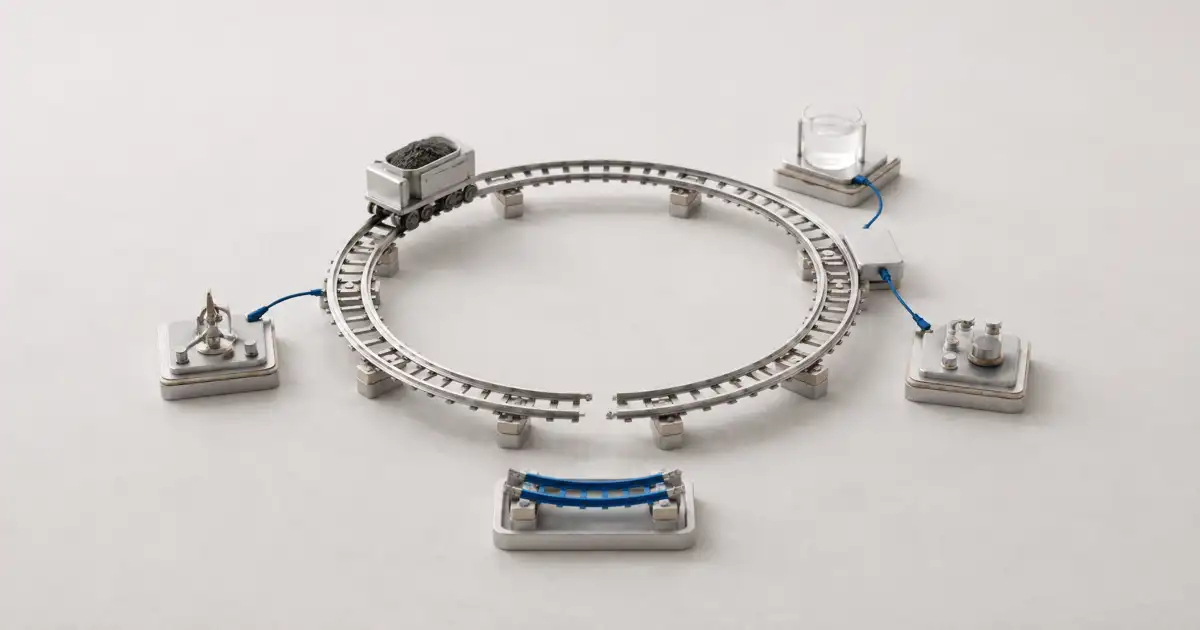
How to maintain an architecture without turning it into a permanent project
Maintaining an architecture starts with distinguishing a signal worth recording, a small change with a clear owner, and a structural decision that deserves deliberate review.
Before starting another update, examine what kind of change the work is calling for. Once a catalog is published, it begins to age: new uses emerge, definitions acquire different interpretations, and tasks no longer fit comfortably. The usual response swings between freezing it to protect comparability and turning every observation into a transformation project.
Sustainable operations need a different rhythm. Not every change needs the same forum, and not every signal should immediately change the architecture.
Create a single entry point for signals
A change request should identify the entity in question, the decision it affects, the supporting evidence, and what would happen if nothing changed. This brief format avoids a buildup of vague comments and allows requests from different areas to be compared.
The entry point can accept an ambiguous term, a new skill, a missing relationship, or an assessment case that does not fit. It can also record a verifiable change in the work. Recording a signal does not approve it. It preserves enough context to detect recurrence.
NIST publishes a process for proposing changes to the NICE Framework and maintaining traceability as it evolves. The domain is cybersecurity, not talent architecture, but the mechanism illustrates a transferable practice: separate receipt of a request from the decision about a version. NIST NICE (opens in a new tab).
Resolve small changes close to where they are used
A clarification, example, or editorial correction does not need to engage the body that decides on mergers or retirements. Define the minor changes an owner can approve within explicit limits, and document their effect.
Local autonomy works when there is a common semantic authority. An area can add context to a definition without quietly creating another skill with the same meaning. When a change affects comparability, assessment, or mobility across areas, it is no longer local, however small it may seem.
Assigning ownership matters more than multiplying committees. Every entity needs someone who can answer for its meaning and bring together evidence when it is questioned. The owner does not decide alone; they keep the request from becoming orphaned. Minimum viable governance defines the thresholds and traceability that sustain that responsibility.
Reserve structural review for clear triggers
Splitting, merging, retiring, or changing a skill’s scope can alter profiles, data, and decisions. Group these issues into a bounded review cycle or trigger a review in response to events: a sustained volume of exceptions, a transformation in the work, conflicting uses, or an unjustified consequence.
The review cycle should not become a ritual of reopening the entire catalog. Start with the accumulated signals and affected dependencies. If a definition still works, it does not need rewriting to demonstrate activity.

In implementation research, the FRAME framework proposes documenting what was modified, why, when, and with what effect. It was developed in healthcare and does not validate a method for skills architecture; its approach to traceability helps distinguish intentional adaptation from unobserved drift. Stirman et al., 2019 (opens in a new tab).
Use versions to preserve meaning
An edit date is not enough. A version should explain which entities changed, which uses are affected, and when the new interpretation takes effect. Maintain mappings when a skill is split or merged, but do not pretend there is equivalence where it no longer exists.
Historical results need context. An assessment conducted under an earlier definition should not automatically be reinterpreted against the new standard. It may still provide evidence, lose relevance, or need supplementation. The decision depends on how much the work has changed and the intended use.
Communicate only what each audience needs. Assessors need updated criteria; integration administrators need identifiers and dates; decision-makers need to understand whether the change affects comparability. An exhaustive record that nobody can interpret is not governance.
Measure friction and learning
The health of maintenance cannot be reduced to a change count. Monitor response times, repeated requests, open exceptions, definitions with incompatible interpretations, and decisions that still rely on manual clarification.
It is also worth reviewing the cost of not changing. A stable entity may continue to generate invisible rework in every area. Conversely, a catalog with frequent edits may shift the cost to integrations, training, and historical series. Good operations balance both kinds of debt.
Close or retire what no longer adds value
Every request needs an outcome: approved, rejected, incorporated as local context, deferred for lack of evidence, or linked to another discussion. Keeping a graveyard of pending items erodes trust because nobody knows whether the system is learning.
A living architecture is not one that is always open for revision. It is one that can listen continuously and change proportionately. Its stability comes from thresholds, owners, and memory, not from preventing configurations from changing as demand changes.
Keep exploring

Sorting Things Out: every taxonomy describes and decides
The book Sorting Things Out examines how categories and standards organize the world while distributing visibility, work, and consequences. Reading it through the lens of a skills architecture extends that inquiry to the decisions a taxonomy makes possible.
Minimum viable governance for a skills architecture
Before scaling an architecture, define which decisions need an owner, a threshold, traceability, and the ability to pause.
Who can see what: access, privacy, and purpose in talent data
Who needs to see a piece of talent data, in how much detail, and for how long? The answer begins with the authorized task, not hierarchical rank.
How to tell whether a skills-first initiative creates value after the pilot
To decide what comes after the pilot, examine which decisions changed, which outcomes followed, and what it costs to sustain the mechanism. Participation and coverage do not yet demonstrate value.
How long does a skills assessment remain current
An older assessment may still guide development yet be insufficient for assigning a critical responsibility. Its date alone does not determine whether it remains useful.
What AI can infer about a skill—and what it should not infer
What can AI claim about a skill from digital traces? Moving from data to signal, inference, and decision involves leaps that require control.