Data & decision-making

Articles about using data, measurement, and uncertainty to make better decisions.

21 articles

Latest articles

  1. Small containers, instruments, and samples connected by blue cables on a white background.

    What to measure in a skills pilot to know whether it works

    PRYSMAP

    A skills pilot does not need to demonstrate the final impact of the entire initiative immediately. Before it is scaled, the pilot needs to produce enough evidence to show whether the process is understood, can be carried out, yields consistent information, and improves real decisions.


  2. The cover of How to Measure Anything on a wooden table beside a rolled measuring tape.

    What How to Measure Anything can teach us about talent

    PRYSMAP

    The most productive contribution of How to Measure Anything is not the promise of a number for everything. It is the demand that we specify which uncertainty we want to reduce before we begin collecting data.

  3. Two clear containers of different shapes hold gray liquid at different heights.

    When two data points look comparable but are not

    PRYSMAP

    A dashboard shows the same result for two business areas: 72% meet an expectation. The apparent equivalence vanishes once we learn that each percentage was built from different people, time periods, and sources.

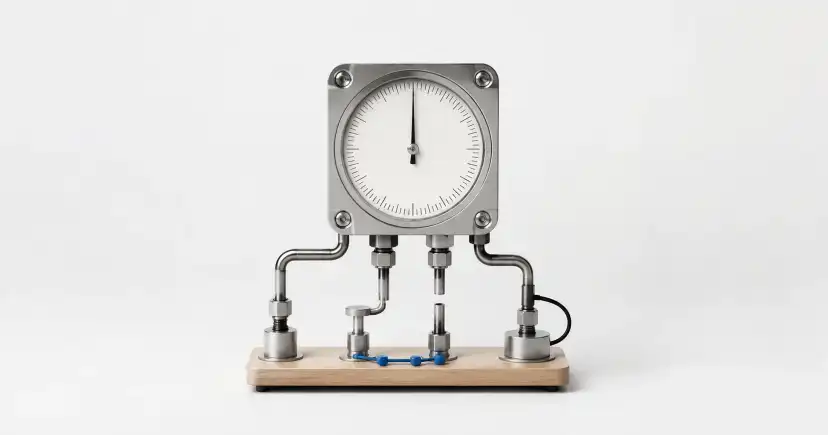
  4. Needle gauge connected by tubes to a wood-and-metal base.

    The illusion of precision in talent dashboards

    PRYSMAP

    A dashboard can display 73.4 and still fail to explain what was observed, how the evidence was combined, or how much the conclusion could change. Visual exactness does not guarantee conceptual precision.

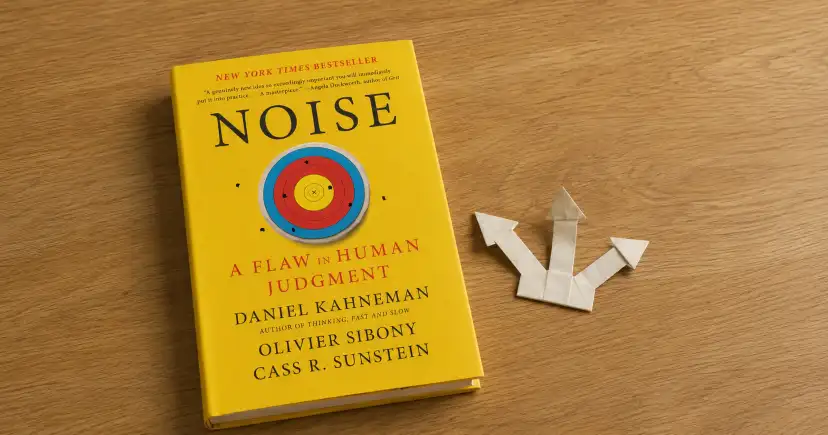
  5. The yellow cover of Noise on a wooden table beside two white paper shapes.

    Noise — why two assessors see different results

    PRYSMAP

    Noise brings an uncomfortable idea to talent decisions: two competent assessors can apply the same criteria and reach different conclusions for reasons the system never deliberately chose to accept.

  6. Three clear cylinders holding puzzle fragments; the last is frosted and conceals its contents.

    What to do when evidence is insufficient to decide

    PRYSMAP

    Missing evidence, conflicting evidence, and uncertainty are not the same problem. When they are collapsed into a generic category, an organization may manufacture certainty, defer a decision indefinitely, or treat something it has not yet observed as a gap.

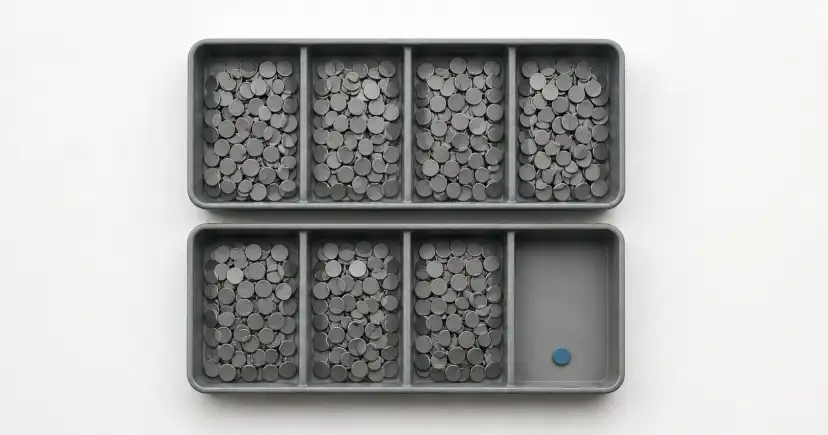
  7. Two compartment trays filled with gray discs, except for one section holding a single blue disc.

    The average can hide the most important gap

    PRYSMAP

    An average can accurately represent the center of several results while concealing the difference that matters most to the decision. Its usefulness depends on which components it combines and which of them may compensate for one another.

  8. A laboratory control panel with gauges, controls, levers, and blue cables.

    When measuring more does not mean deciding better

    PRYSMAP

    More measurement can broaden understanding while making a decision harder. The difference depends on whether each signal has an explicit function, a defined audience, and a recognizable use.