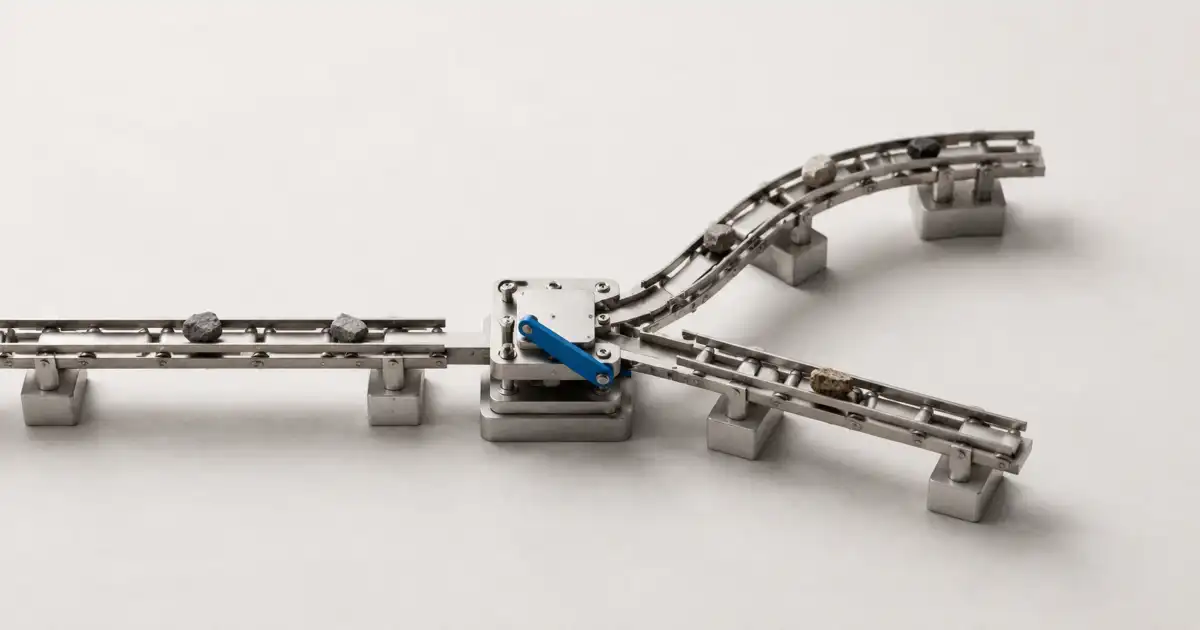
Adoption begins when the model changes a decision
Even when usage is high, a model may not yet have been adopted: the decisive evidence appears when it changes a real decision and that change can be reconstructed.
Implementation research distinguishes outcomes that are often combined under a single word. A skills architecture pilot may end with strong numbers, yet three months later a critical vacancy may once again be filled using the same old filters.
The case is a composite. It does not describe a specific company. It makes it possible to observe the common distance between participating in an implementation and using it to decide.
The accountable team might defend adoption with access metrics. Human Resources might point out that the hiring decision never changed. Both would be looking at different outcomes.
Use, adoption, and effect are not interchangeable
Logging into a platform indicates contact. Completing an action indicates use. Applying the model with its intended meaning in a relevant decision provides evidence of integration. Maintaining that practice as support declines speaks to sustainability.
Proctor and colleagues proposed a taxonomy that distinguishes implementation outcomes such as acceptability, adoption, appropriateness, feasibility, fidelity, penetration, and sustainability. The framework emerged from health services research and should not be transferred as an automatic corporate scale. Its contribution to this analysis is conceptual: different outcomes answer different questions. Proctor and colleagues, Outcomes for Implementation Research, 2011 (opens in a new tab).
A model may be accepted without being used. It may be used extensively while losing fidelity. It may be applied correctly during a pilot and disappear when support is withdrawn.
Reconstructing a decision changes the conversation
Instead of asking whether leaders use the model, the team selects three recent decisions. It reviews a project assignment, a development recommendation, and an internal move.
For each one, it records five elements:
- the criterion that would have been used before.
- the new evidence provided by the model.
- the alternative that the evidence made visible.
- the decision made and who accepted accountability.
- what happened afterward, including any adjustment or reversal.

For the project assignment, the leader incorporated evidence of transferable experience and selected someone outside the usual team. The model changed which alternatives were considered.
For development, the platform suggested a gap, but the final recommendation was the same general course from the previous year. There is no evidence that the decision changed.
For mobility, two profiles were compared based on the proximity of their skills. The decision stopped because no one had defined how to handle insufficient evidence. The model did enter the process, although it did not yet support a conclusion.
Changing a decision does not prove complete causality
If the project achieves better results after bringing in the person selected, we should not attribute the entire improvement to the model. Leadership, resources, context, and other people’s performance also play a part.
The defensible evidence is narrower: the model introduced information that changed the option under consideration; the decision was made under explicit criteria; and an outcome was later observed. That chain allows learning without confusing contribution with exclusive causation.
The same caution applies when the result is negative. Poor subsequent execution does not prove on its own that the initial decision was wrong. The sequence and conditions must be preserved.
Persistence reveals whether the practice changed
One different decision may be an exception promoted by the pilot team. To speak of sustained adoption, it is useful to observe what happens under pressure: limited time, the absence of an expert, or an urgent vacancy.
If the people accountable return to the previous criterion, feasibility may be lacking. The model may require evidence that is not available in time. If different teams interpret levels incompatibly, the problem may be fidelity. If no one knows who resolves a discrepancy, governance is missing.
Each diagnosis calls for a different intervention. More communication does not resolve an ambiguous rule on its own. More training does not fix a tool that arrives after the decision.
Measure adoption as a portfolio
Coverage, frequency, and satisfaction metrics remain useful. They help detect unequal access, friction, or rejection. Their limit appears when they are presented as complete proof of change.
A stronger portfolio combines signals of contact with samples of reconstructed decisions. There is no need to audit every case. A representative set can be selected by unit, type of decision, and level of risk to determine whether the initiative creates value beyond the pilot.
The review should respect purpose, confidentiality, and proportionality. It seeks to understand whether the model enters the point where it promised to add value, without monitoring individual conversations.
The case continues How to scale beyond the pilot without losing quality. Scaling preserves meaning; adoption means incorporating it into the work. It also connects with What it means for an assessment to be valid for a specific decision. A measurement can be technically consistent yet unsuitable for its assigned use.
Adoption does not begin when the dashboard fills up. It begins when a decision can be explained differently because the model contributed relevant evidence, and when that practice survives the end of the pilot.
To extend this reading, see How to connect skills with outcomes without confusing correlation and causation and How to tell whether a skills-first initiative creates value after the pilot, which develop complementary dimensions of the problem.
Keep exploring

How to tell whether a skills-first initiative creates value after the pilot
To decide what comes after the pilot, examine which decisions changed, which outcomes followed, and what it costs to sustain the mechanism. Participation and coverage do not yet demonstrate value.

How to maintain an architecture without turning it into a permanent project
Maintaining an architecture starts with distinguishing a signal worth recording, a small change with a clear owner, and a structural decision that deserves deliberate review.

Who can see what: access, privacy, and purpose in talent data
Who needs to see a piece of talent data, in how much detail, and for how long? The answer begins with the authorized task, not hierarchical rank.

How long does a skills assessment remain current
An older assessment may still guide development yet be insufficient for assigning a critical responsibility. Its date alone does not determine whether it remains useful.

Sorting Things Out: every taxonomy describes and decides
The book Sorting Things Out examines how categories and standards organize the world while distributing visibility, work, and consequences. Reading it through the lens of a skills architecture extends that inquiry to the decisions a taxonomy makes possible.

What AI can infer about a skill—and what it should not infer
What can AI claim about a skill from digital traces? Moving from data to signal, inference, and decision involves leaps that require control.